
















Home » Areas We Serve » Aledo » Aeration
Lawn Aeration in Aledo, TX
Aledo, TX clay soil packs tight. Lawn aeration opens it up so water, air, and nutrients can reach the roots.
Black Hill Landscaping provides lawn aeration service for Aledo, TX homeowners dealing with compacted soil, thinning turf, and lawns that stay stressed even with regular watering and mowing. In North Texas, heavy clay soil limits oxygen movement, slows water penetration, and keeps roots shallow. Our core aeration service pulls plugs from the soil so your grass can breathe, root deeper, and respond better to fertilization, overseeding, and seasonal lawn maintenance.


Get Your Lawn Assessment
- Core aeration timed to your grass type’s active growing season
- Relieves soil compaction caused by Aledo, TX clay-heavy soil
- Improves water infiltration, nutrient absorption, and root depth
- Pairs well with fertilization and overseeding for stronger lawn recovery
Core Aeration
Seasonal Timing
Fast Recovery
Signs Your Lawn Needs Aeration in Aledo, TX
Aledo, TX soil can become heavily compacted from foot traffic, mowing, summer heat, and day-to-day use. When soil compacts, water runs off instead of soaking in, fertilizer stays near the surface, and roots remain shallow because they cannot push through dense ground. That leaves the lawn thinner, weaker, and slower to recover.
Signs your lawn may need lawn aeration include:
- Water runs off instead of soaking in: You water regularly, but the soil stays hard and dry underneath.
- Thin or patchy grass: Turf does not thicken up even with regular fertilization and watering.
- Spongy thatch layer: A buildup of dead grass and organic material starts separating the soil from the green blades.
- Hard soil feel: The ground feels dense, compacted, and difficult to penetrate.
- Bare or weak spots: Thin areas fail to fill in because roots cannot develop properly in compacted soil.
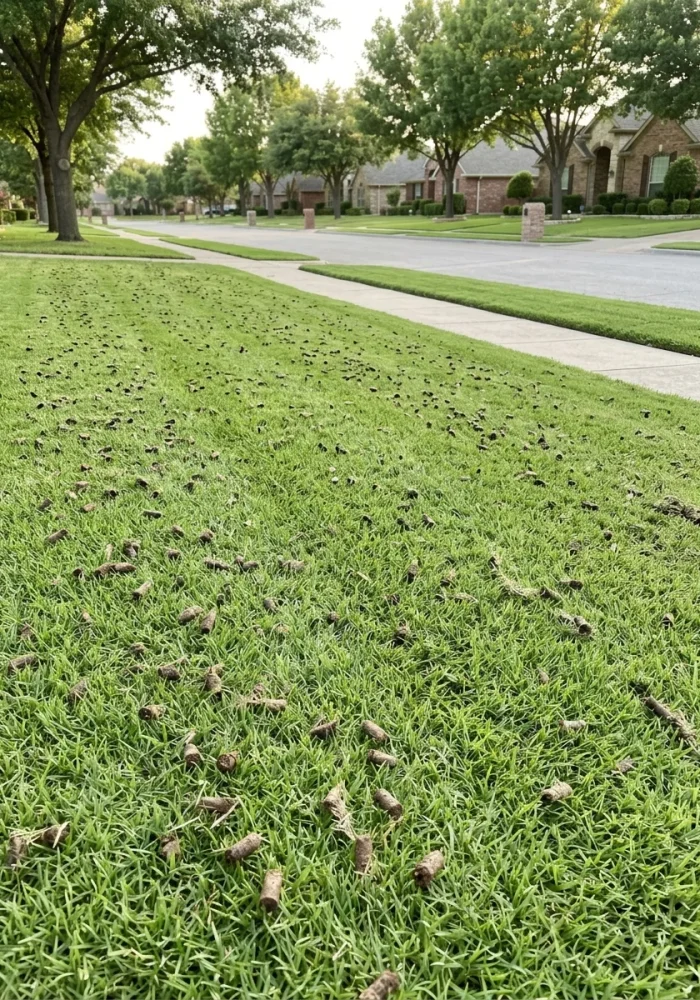
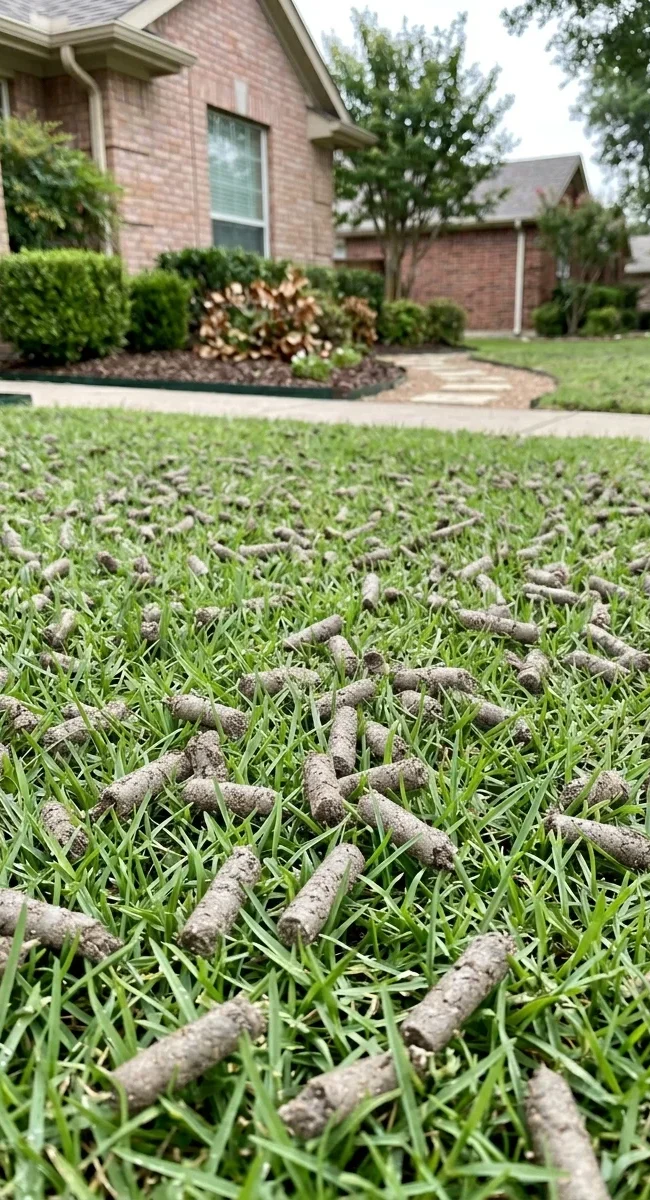
Our grass aeration process pulls 2 to 3-inch soil plugs from the surface, breaking up compaction and creating channels for air, water, and nutrients to move where they need to go.
Best Time to Aerate Your Lawn in Aledo, TX
Aeration timing depends on your grass type. The goal is to perform lawn aeration service when the turf is actively growing so it can recover quickly and fill in the holes naturally.
Bermuda Grass
Aerate from late spring through summer, usually May through July. Bermuda grows aggressively in warm weather and responds best when soil temperatures are up and the lawn is actively spreading.
St. Augustine Grass
Aerate in late spring or early summer, usually April through June. St. Augustine benefits from core aeration service when it is fully out of dormancy and actively growing.
Zoysia Grass
Aerate from late spring into summer, usually May through August. Zoysia responds well during its active growing period, though it may recover more gradually than Bermuda.
Fall Aeration
A second aeration in early fall can help some Aledo, TX lawns that deal with heavy compaction, high traffic, or dense clay soil pressure. Fall is also a smart time to pair aeration and overseeding where appropriate.
How often
Most Aledo, TX lawns benefit from lawn aeration once per year. Lawns with heavier use, severe compaction, or ongoing drainage issues may need more frequent treatment.
Core Aeration vs. Liquid Aeration vs. Spike Aeration
Not all aeration methods do the same thing. For Aledo, TX lawns, the method matters because clay-heavy soil needs real compaction relief, not surface-level marketing language.
Core Aeration
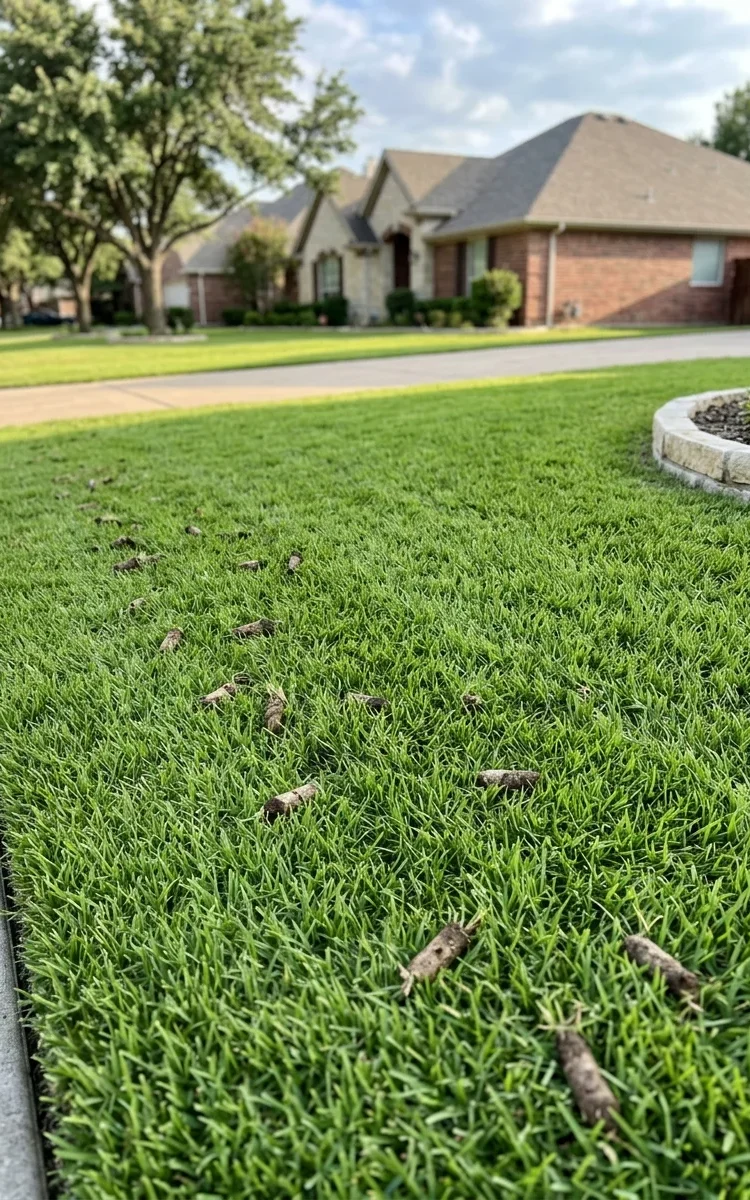
Core aeration removes small plugs of soil from the ground. This is the most effective grass aeration method for compacted clay soil because it creates actual space for air, water, and nutrients to move into the root zone. It also helps reduce thatch and improves rooting depth over time.
Liquid Aeration
Liquid aeration is a soil treatment applied to the lawn that claims to loosen soil at a molecular level. It may help with minor surface conditioning in some situations, but it does not physically remove compacted soil. On dense Aledo, TX clay soil, it is not a true replacement for core aeration.
Spike Aeration
Spike aeration punches holes into the lawn without removing soil. That can actually press the surrounding soil tighter around each hole, which makes it a weaker option for compacted lawns.
Black Hill Landscaping uses core aeration service because it is the most reliable way to relieve compaction and improve lawn performance in Aledo, TX conditions.
Frequently Asked Questions
When is the best time to aerate my lawn in Aledo, TX?
The best time depends on your grass type and whether the lawn is actively growing. For Bermuda grass, late spring through summer is usually best. For St. Augustine, late spring into early summer works well. For Zoysia, late spring through summer is the ideal window. Aerating during active growth helps the lawn recover faster and makes the core aeration service more effective.
How much does lawn aeration cost in Aledo, TX?
The cost depends on lawn size, soil condition, access, and whether the service is paired with fertilization, overseeding, or other lawn maintenance work. Smaller yards usually cost less, while larger properties or lawns with severe compaction may require more time and coverage. After an assessment, we can recommend the right lawn aeration service based on the actual condition of the yard.
How do I know if my lawn needs aeration?
You likely need lawn aeration if water runs off instead of soaking in, the soil feels hard, turf stays thin, or the lawn struggles to improve even with watering and fertilization. A spongy thatch layer, compacted traffic areas, and bare spots are also common warning signs. In Aledo, TX, clay soil compaction is one of the biggest reasons lawns stop performing.
How often should I aerate my lawn in Aledo, TX?
Most lawns benefit from core aeration once a year. If the lawn sees heavy foot traffic, frequent mowing pressure, or repeated compaction from dense clay soil, twice per year may make sense. The right frequency depends on how quickly the soil tightens up and how the turf is responding from season to season.
What is core aeration and how does it work?
Core aeration is a mechanical process that removes small plugs of soil from the lawn. Those openings improve airflow, help water move deeper into the ground, reduce compaction, and allow fertilizer and nutrients to reach the root zone more effectively. It is one of the most effective grass aeration methods for Aledo, TX lawns with heavy clay soil.
Is liquid aeration effective on Aledo, TX lawns?
Liquid aeration may have some value as a supplemental treatment, but it is not a true substitute for core aeration service on compacted North Texas soil. If the lawn is dealing with real density and shallow rooting, removing soil plugs is still the more effective approach. For most Aledo, TX lawns, core aeration provides the stronger result.
Will aeration make my lawn look bad temporarily?
Yes, but only for a short time. After aeration, you will see soil plugs across the surface for a week or two. That is normal. Those plugs break down naturally and return organic matter to the lawn. The temporary mess is part of what makes lawn aeration service effective, and the lawn usually looks better once recovery begins.