









Home » Areas We Serve » Arlington » Landscaping Services
Landscape Design and Installation in Arlington, TX
Designed around your property, built for Arlington, TX conditions.
Great landscape design should do more than make a yard look better for a few weeks. It should improve flow, strengthen curb appeal, support drainage, and give your outdoor space a clean, finished look that fits the home. Black Hill Landscaping provides landscaping services in Arlington, TX, including landscape design and installation for homeowners who want thoughtful planning, practical plant choices, and professional landscape installation service that holds up over time.


Get Your Free Property Assessment
- Custom landscape design based on your property’s soil, sun, drainage, and layout
- Plant, shrub, and tree selection for Arlington’s clay soil and climate
- Flower bed construction with soil amendment and proper mulching
- Coordinated with irrigation to ensure everything gets watered correctly from day one
Landscape Design
Landscape Installation
Weed Suppression and Landscape Uniformity
Landscape Design for Arlington Homes
A landscape that looks good in year one and falls apart by year three wasn't designed. It was decorated. Black Hill's design process starts with understanding your property before recommending anything.
Property Assessment
We walk your property and evaluate soil type, pH, compaction, sun and shade patterns throughout the day, drainage flow, existing trees and structures, and how your family uses the yard. Arlington’s clay soil and summer heat eliminate a lot of plant options before we even start designing.
Design and Plant Selection
Based on the assessment, we design a layout with plants, shrubs, trees, and bed configurations that match your property’s conditions. Every species is selected for Arlington’s climate, your specific soil, and the sun exposure in each zone of your yard. You see the design and approve it before we start.
Landscape Installation Services in Arlington
Installation
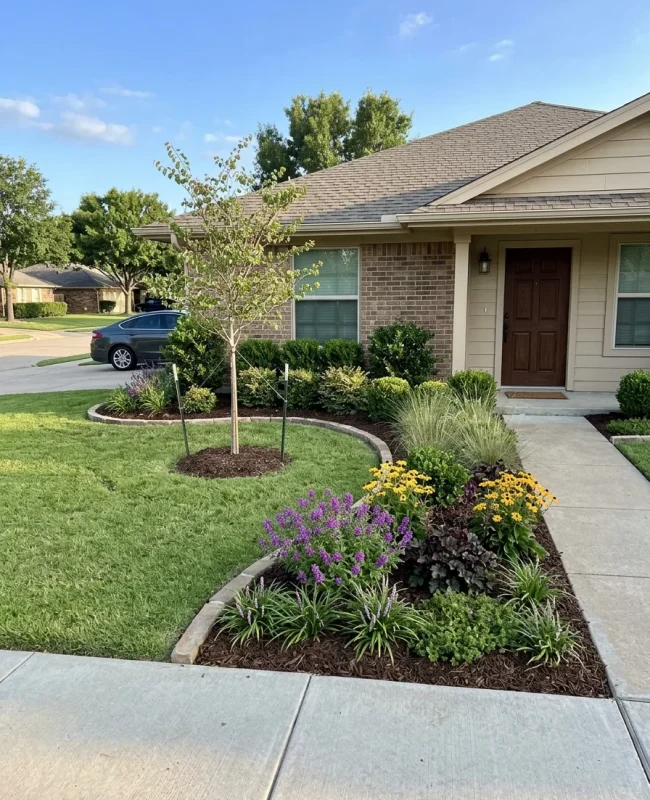
Once the design is approved, we move into landscape installation with attention to layout accuracy, spacing, bed definition, grade transitions, and clean finishing details. That includes planting, mulch or rock placement, edging, and hardscape integration where needed.
Irrigation Coordination
New landscaping performs better when water coverage matches the design. We review irrigation exposure around new beds and planting zones so the finished work has the support it needs to establish properly.
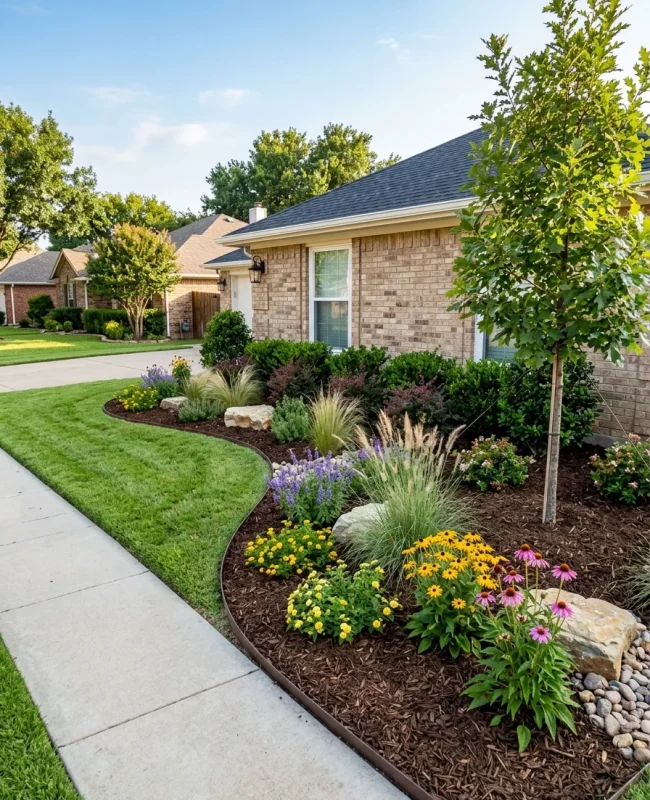
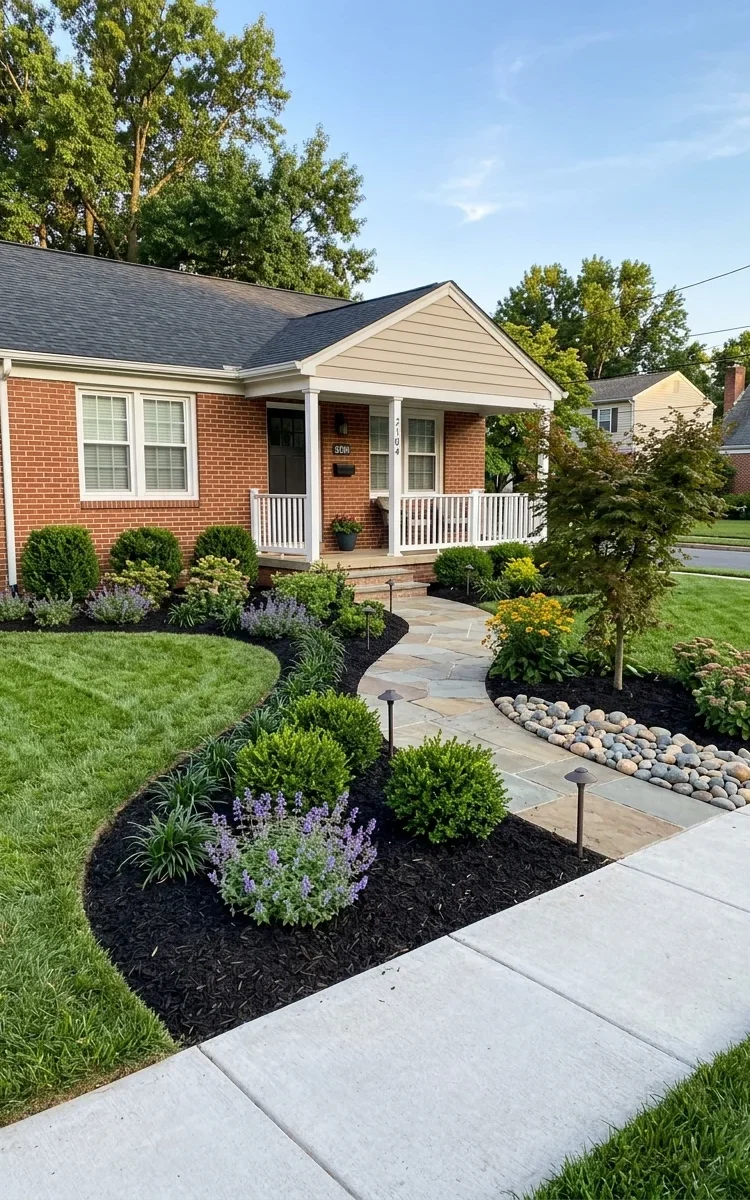
Landscape Installation Services in Arlington
Black Hill Landscaping delivers landscape design and installation with a focus on clean execution, durable materials, and plant layouts that make sense for the property. Our landscape installation services may include:
- Plant and Shrub Installation. Native and adapted species selected for your soil, sun, and water conditions. Texas Sage, Red Yucca, Yaupon Holly, Autumn Sage, Turk’s Cap, and other Arlington-proven plants installed with proper soil preparation and spacing for mature size.
- Flower Bed Construction. Beds designed, excavated, graded for drainage, and amended with organic matter. Edging installed to define borders and prevent turf encroachment. Seasonal color options available.
- Mulching. Hardwood, bark, or engineered mulch applied at 2 to 3 inches across all beds. Mulch retains soil moisture, moderates temperature, and suppresses weed growth. Refreshed annually or semi-annually based on decomposition and rainfall.
- Tree Planting. Species selected for mature canopy size, root spread, sun/shade requirements, and proximity to structures. Trees are planted at the correct depth, staked for wind protection, and mulched around the base. Drip irrigation connected for establishment watering.
- Soil Amendment. Arlington’s clay soil needs help. Organic compost improves aeration and root penetration. Expanded shale worked 6 to 8 inches deep improves drainage in beds that hold water. pH adjustments made where needed for specific plant requirements.
- Sod and Turf Integration: New sod installation or turf tie-ins where lawn areas need to connect cleanly with the landscape design.
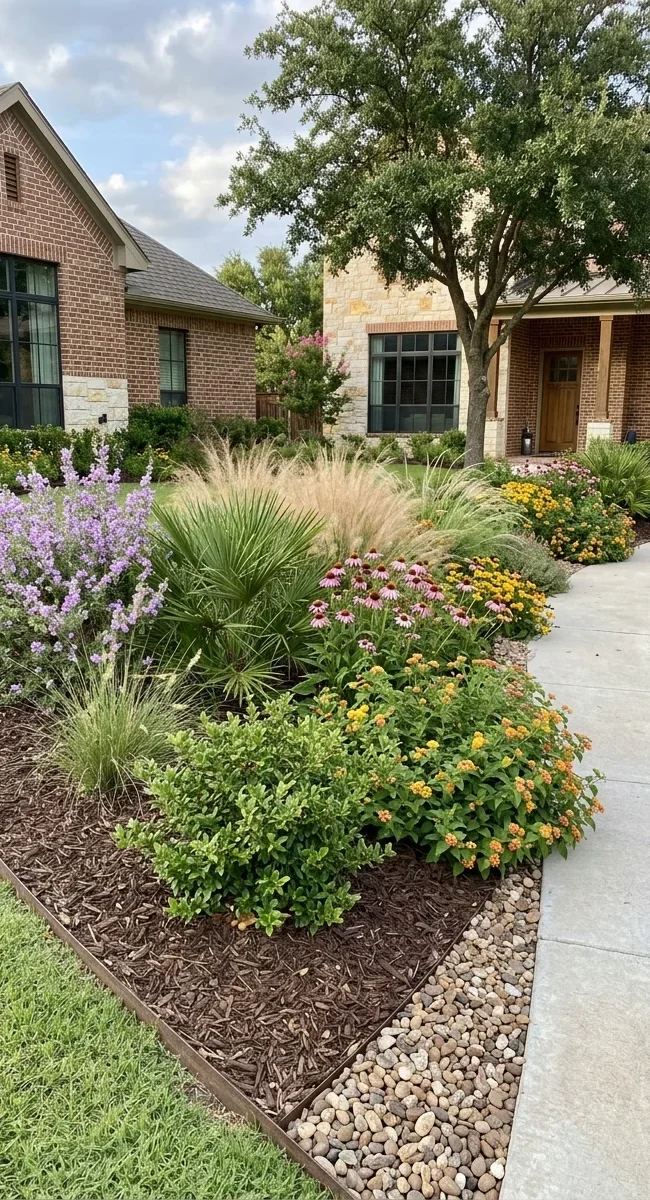
Best Plants for Arlington Landscaping
Arlington’s clay soil, alkaline pH, summer heat, and twice-per-week watering restrictions narrow the field. The plants that thrive here are the ones adapted to these conditions. Choosing the wrong species means constant watering, replacement, and frustration.
Native and Drought-Tolerant Shrubs:
- Texas Sage. Silver-gray foliage, purple blooms after rain. Full sun. Extremely drought-tolerant once established.
- Yaupon Holly. Evergreen, shade-tolerant, low water needs. Works as a hedge or accent.
- Autumn Sage. Red, pink, or coral blooms spring through fall. Attracts hummingbirds. Full sun to part shade.
- Texas Mountain Laurel. Evergreen, fragrant purple blooms in spring. Slow-growing but worth the wait.
Perennials and Ground Cover:
- Red Yucca. Coral flower spikes spring through fall. Full sun. Almost zero supplemental water once established.
- Black-Eyed Susan. Yellow blooms summer through fall. Full sun. Self-seeding.
- Purple Coneflower. Drought-tolerant, pollinator-friendly. Full sun to part shade.
- Turk’s Cap. Shade-tolerant, red blooms, attracts hummingbirds. One of the few plants that thrives in Arlington shade and clay.
Trees:
- Cedar Elm. Native to North Texas. Drought-tolerant, fast-growing shade tree.
- Desert Willow. Pink or purple blooms, low water. Works as an accent or small shade tree.
- Lacey Oak. Blue-green foliage, moderate size. Good for smaller Arlington yards.
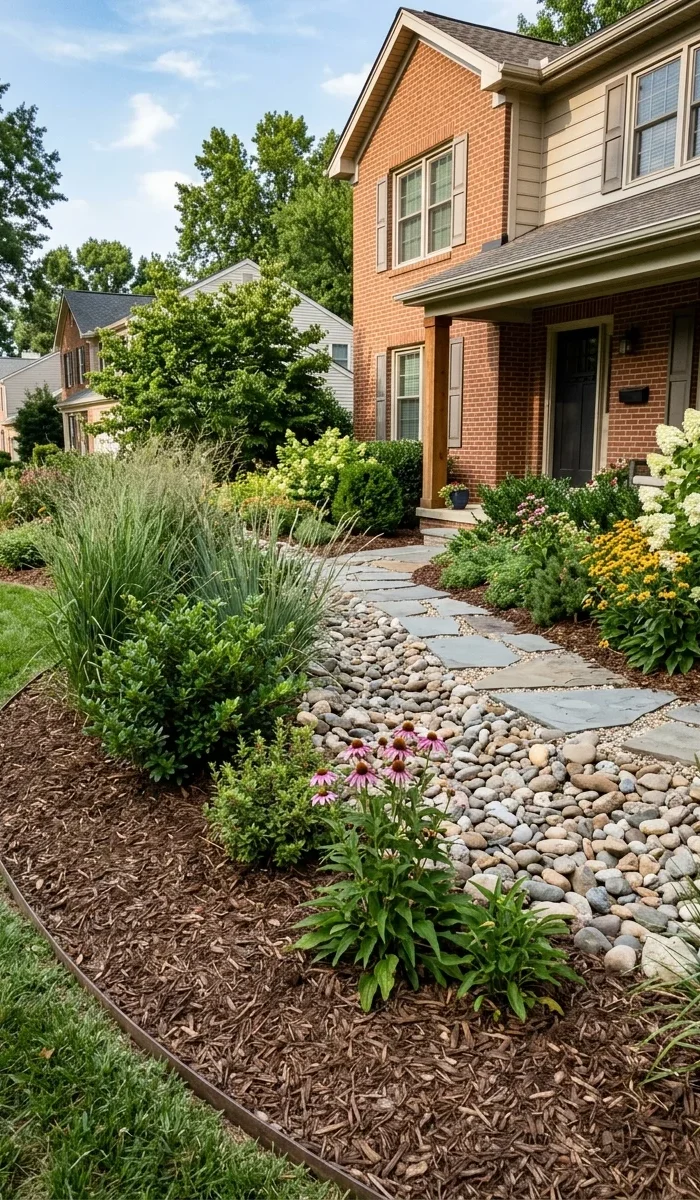
Landscaping in Arlington's Clay Soil and Climate
- Clay Soil. Dense, alkaline, poorly draining. Requires organic amendment (compost) for root penetration and expanded shale for drainage improvement. Without soil prep, new plants sit in water after rain and bake in dry spells.
- Summer Heat. Arlington regularly exceeds 100 degrees June through August. Plants need heat tolerance, not just drought tolerance. There’s a difference.
- Watering Restrictions. Arlington allows twice-per-week landscape watering year-round. Plant selection must account for limited irrigation. Native and drought-adapted species handle this. Most ornamental varieties from other regions don’t.
- Alkaline pH. Arlington soil runs alkaline, which limits nutrient availability for some plant species. Acid-loving plants (azaleas, gardenias) struggle here without constant soil amendment.
Black Hill Landscaping plans landscaping services in Arlington, TX around real site conditions. That helps Arlington, TX homeowners get outdoor spaces that look refined, function well, and stay easier to manage over time.
Frequently Asked Questions
How much does landscape installation cost in Arlington, TX?
Pricing depends on the scope of work, plant count, bed size, material selection, drainage needs, and whether the project includes sod, rock, edging, or layout changes. A simple bed refresh costs less than a full landscape design and installation project. After assessment, we outline a clear scope so pricing reflects the actual work your property needs.
When is the best time for landscape installation in Arlington, TX?
Many projects can be installed throughout the year, but timing depends on the type of work being done. Planting, sod installation, and larger landscape installation services often perform best when scheduling matches weather, irrigation readiness, and plant establishment needs. We recommend timing based on the project rather than forcing everything into one season.
How deep should mulch be applied?
In most landscape beds, mulch is typically installed at a depth that covers the surface evenly without burying plant crowns or trapping excess moisture against trunks and stems. The right depth depends on the material, bed condition, and surrounding drainage, but the goal stays the same: clean appearance, moisture support, and weed suppression without overloading the bed.
How long does a landscape installation take?
That depends on project size, access, weather, and the amount of prep work required. Smaller front yard landscape design updates may move quickly, while larger landscape installation service projects with multiple beds, trees, drainage adjustments, or sod work take longer. We set expectations clearly before work begins.
Can new plant beds and trees survive in clay soil?
Yes, but they need the right planning. Clay soil can hold water too long in some areas and dry out hard in others, so plant selection, spacing, soil preparation, and drainage awareness matter. A good landscape design company should build around those conditions instead of ignoring them.
Will my new landscape work for Arlington, TX watering restrictions?
It can. We design landscapes with realistic irrigation use in mind by selecting appropriate plants, organizing bed areas efficiently, and avoiding layouts that require excessive water just to survive. That gives homeowners a more practical and resilient outdoor landscape design for long-term performance.