
Home » Areas We Serve » Fort Worth » Aeration
Lawn Aeration in Fort Worth
Fort Worth clay packs tight. Aeration opens it up so water, air, and nutrients reach the roots.
Black Hill Landscaping provides core aeration services for Fort Worth homeowners dealing with compacted soil, thinning turf, and lawns that don't respond to watering or fertilization the way they should. Fort Worth's clay-heavy soil compacts under heat, foot traffic, and mowing. Aeration pulls plugs from the soil to open channels for water, oxygen, and nutrients to reach the root zone. The result is a lawn that absorbs what you give it instead of shedding it off the surface.
Get Your Lawn Assessment
- Core aeration timed for your grass type’s active growing season
- Relieves soil compaction caused by Fort Worth’s clay-heavy soil
- Improves water infiltration, nutrient absorption, and root depth
- Pairs with fertilization and overseeding for maximum results
Core Aeration
Seasonal Timing
Fast Recovery
Why Lawn Aeration Matters in Fort Worth
Fort Worth soil is clay-heavy. Clay compacts under pressure from foot traffic, mowing, summer heat, and even its own weight over time. When soil is compacted, water runs off instead of soaking in. Fertilizer sits on the surface instead of reaching the roots. Roots stay shallow because they can't push through dense soil. Work is completed efficiently and quietly, leaving grounds ready for daily operations.
Signs your Fort Worth lawn needs aeration:
- Water runs off instead of soaking in. You water regularly but the soil stays hard and dry underneath.
- Thin or patchy grass. Turf that won’t thicken up even with fertilization and proper watering.
- Spongy thatch layer. A layer of dead grass and organic material building up between the soil surface and the green blades. More than half an inch of thatch restricts water and air.
- Soil feels hard to the touch. You can’t push a screwdriver into the ground easily.
- Bare spots that won’t fill in. Grass seed or plugs won’t establish because roots can’t penetrate compacted soil.
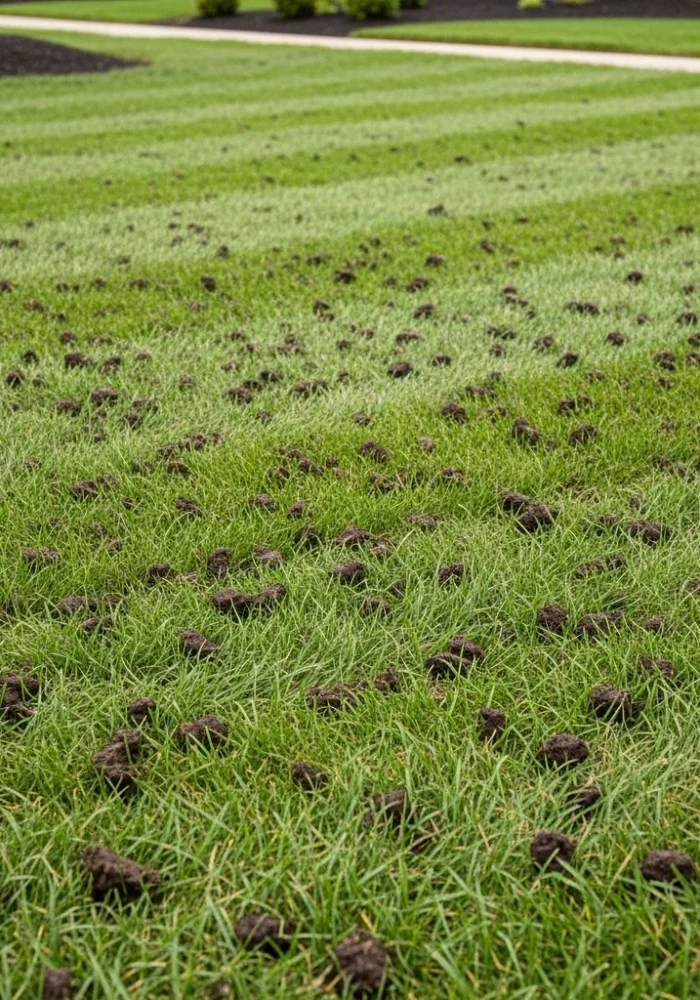
Core aeration pulls 2- to 3-inch plugs from the soil, breaking through compaction and creating channels for water, air, and nutrients. The plugs break down on the surface within a week or two and return organic matter to the soil.
Best Time to Aerate Your Lawn in Fort Worth
Aeration timing depends on your grass type. The goal is to aerate during active growth so your lawn recovers quickly and fills in the holes within a few weeks.
Bermuda Grass: Aerate in late spring through early summer (May through July). Bermuda is most aggressive during Fort Worth’s hottest months and will recover fastest when soil temperatures are high and the grass is actively spreading.
St. Augustine: Aerate in late spring (April through early June). St. Augustine greens up a bit earlier than Bermuda and is actively growing by mid-spring. Avoid aerating during peak summer heat when St. Augustine is under stress.
Zoysia: Aerate in late spring through summer (May through August). Zoysia is slow-growing but responds well to aeration during its active season.
Fall Aeration: A second aeration in early fall (September or October) benefits Fort Worth lawns that see heavy use or have severe compaction. Fall aeration helps roots strengthen before winter dormancy. This is also the best time to pair aeration with overseeding for Bermuda lawns.
How often: Most Fort Worth lawns benefit from aeration twice per year. Fort Worth’s clay soil compacts faster than sandy or loamy soil, so annual aeration at minimum. Heavily used lawns or properties with severe compaction may need both a spring and fall treatment.
Core Aeration vs. Liquid Aeration vs. Spike Aeration
Not all aeration is the same. Here's what actually works on Fort Worth clay soil:
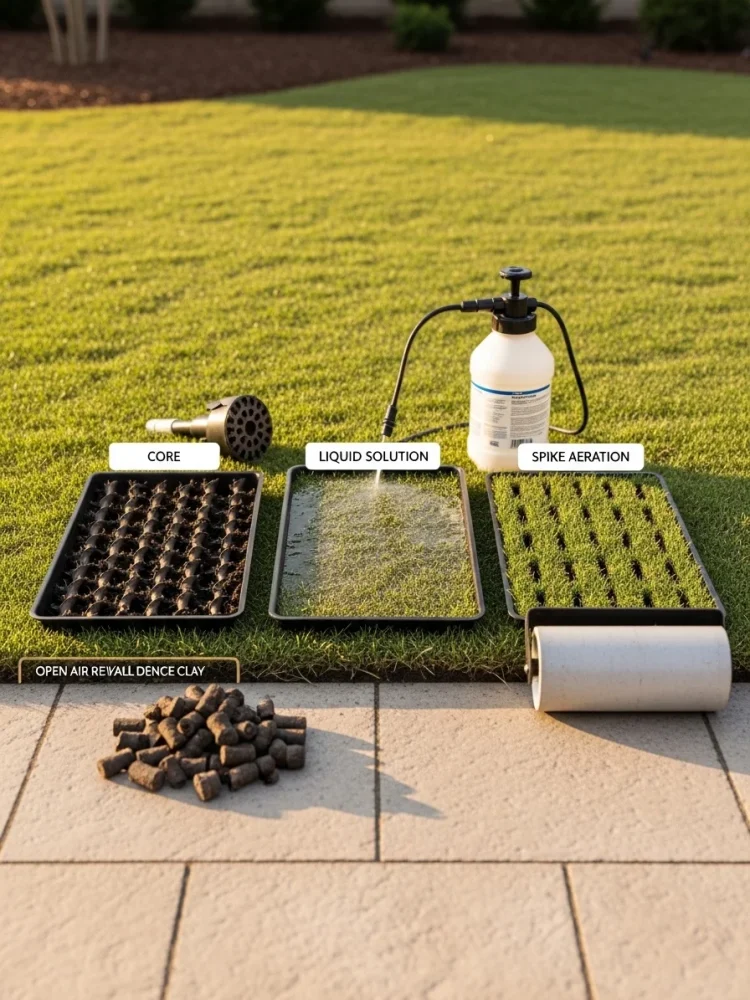
Core Aeration. A machine pulls 2- to 3-inch soil plugs from the ground, physically removing compacted soil and creating open channels. This is the only method proven to relieve compaction in clay soil. The plugs break down on the surface and return nutrients to the lawn.
Liquid Aeration. A liquid solution applied to the lawn that claims to loosen soil at a molecular level. Studies and field results consistently show it does not meaningfully reduce compaction in clay soils. It may have some benefit in sandy or loamy soil, but Fort Worth’s clay requires mechanical intervention.
Spike Aeration. A roller or tool that pokes holes in the soil without removing material. This actually compresses the soil around each hole, making compaction worse in clay. Not recommended for Fort Worth lawns.
Black Hill uses core aeration exclusively because it's the only method that delivers measurable results in Fort Worth's soil conditions.
Frequently Asked Questions
When is the best time to aerate my lawn in Fort Worth?
For Bermuda grass, aerate from May through July during peak growing season. For St. Augustine, late April through early June is ideal. A second aeration in early fall (September/October) benefits lawns with heavy compaction or those being overseeded. Timing during active growth ensures your lawn recovers quickly.
How much does lawn aeration cost in Fort Worth?
Pricing depends on lawn size and soil condition. After an on-site assessment, Black Hill Landscaping provides a clear scope with pricing before work begins.
How do I know if my lawn needs aeration?
Common signs include water running off instead of soaking in, thin or patchy grass that won’t respond to fertilization, a spongy thatch layer, hard soil that resists a screwdriver, and bare spots where grass won’t establish. If your property is on Fort Worth clay (most are), your lawn likely needs aeration at least once a year.
How often should I aerate my lawn in Fort Worth?
Twice per year for most Fort Worth lawns. Fort Worth’s clay soil compacts faster than sandy or loamy soil, so a single annual aeration often isn’t enough. Spring and fall aeration keeps compaction in check year-round. Lawns with heavy foot traffic or severe compaction may benefit from more frequent treatment.
What is core aeration and how does it work?
Core aeration uses a machine to pull small soil plugs (2 to 3 inches deep) from your lawn. This physically removes compacted soil and creates open channels for water, air, and nutrients to reach the root zone. The plugs break down on the surface within one to two weeks and return organic matter to the soil.
Is liquid aeration effective on Fort Worth lawns?
For Fort Worth’s clay soil, liquid aeration has not been shown to meaningfully reduce compaction. It may have some benefit on sandy or loamy soils, but clay requires mechanical intervention to break through. Core aeration is the only method proven to relieve compaction in clay-heavy soil.
Will aeration make my lawn look bad temporarily?
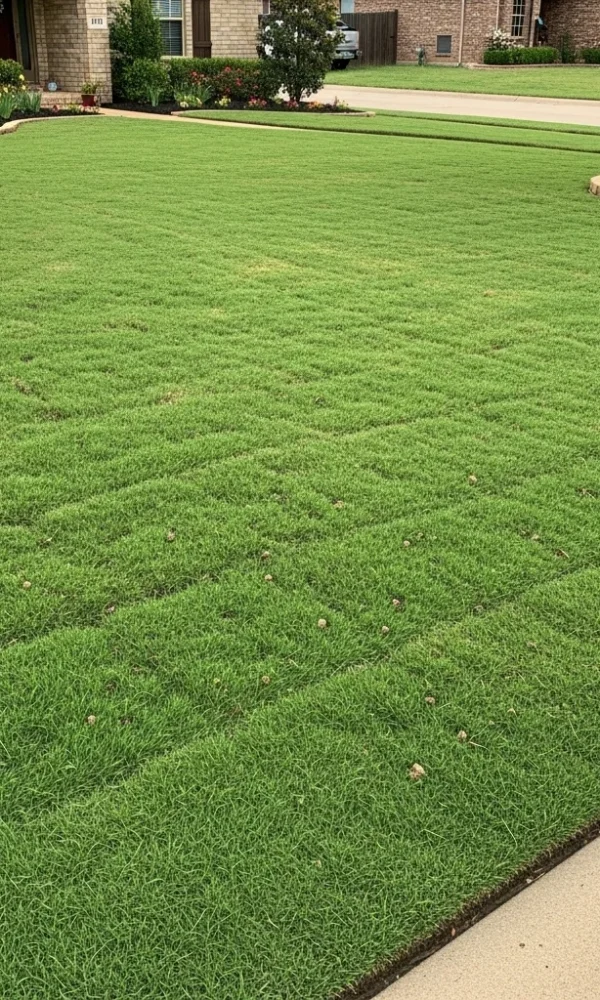
Your lawn will have visible soil plugs on the surface for one to two weeks after aeration. The plugs break down naturally and return nutrients to the soil. Within two to four weeks, your lawn will look better than it did before as water and nutrients begin reaching the root zone more effectively. We recommend watering normally after aeration to speed recovery.