
Home » Areas We Serve » Fort Worth » Fertilization and Weed Control
Lawn Fertilization and Weed Control in Fort Worth
Thick turf. Clean beds. A lawn that looks maintained between visits, not just the day we show up.
Customized fertilization programs based on grass type and soil conditions Pre-emergent and post-emergent weed control integrated into every program Slow-release fertilizer applications for steady growth without burning Documented service reports after every visit
Fertilization Program
Weed Control
Fort Worth Turf Expertise
Documented and Managed Fertilization Management
A targeted approach ensures nutrients are delivered efficiently to each area of your landscape. Every property receives a customized plan that balances plant needs with soil conditions.
Lawn Fertilization Programs for Fort Worth Homeowners
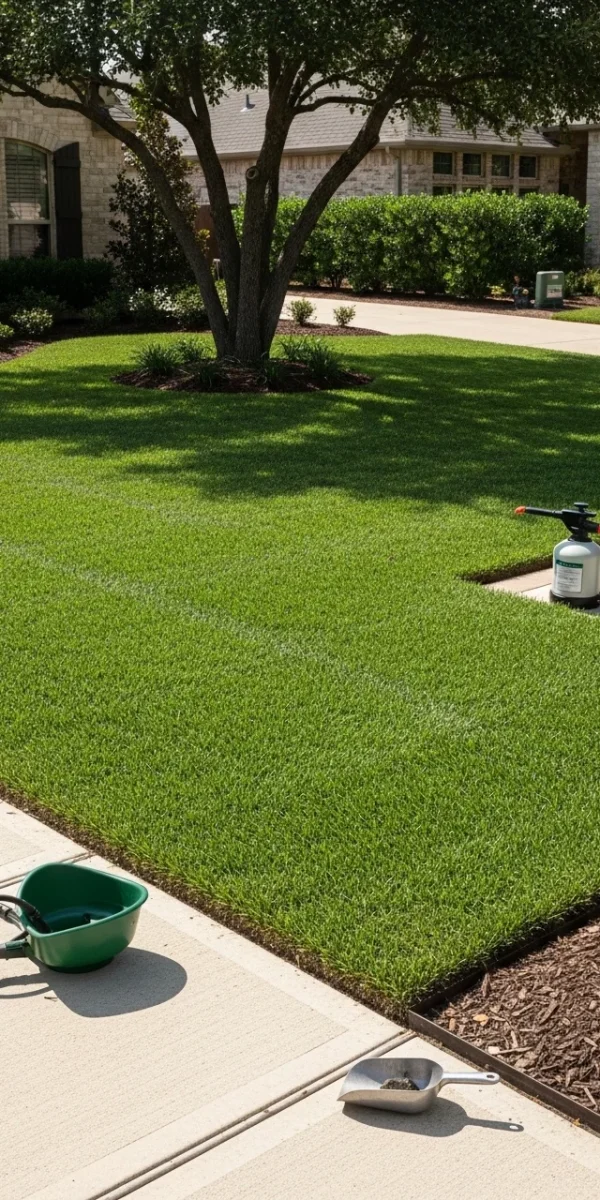
Fort Worth lawns grow warm-season grasses like Bermuda, St. Augustine, and Zoysia. These grasses have specific nutrient needs that change throughout the year. A bag of fertilizer from the hardware store applied on a random weekend isn't a program. It's a guess. Black Hill builds fertilization programs around your lawn's actual conditions. We start with a soil assessment to understand pH, nutrient levels, and organic matter. Then we design a schedule that feeds your turf through each growth phase.
A typical residential program includes 5 to 7 applications per year:
- Early Spring (March). Pre-emergent combined with light fertilization after your lawn greens up. Bermuda and St. Augustine have different green-up timing, and we adjust accordingly.
- Late Spring (April/May). Slow-release nitrogen to drive root growth heading into summer heat.
- Summer (June and August). Two applications to sustain color, density, and stress tolerance through Fort Worth’s hottest months.
- Early Fall (September/October). Potassium-focused application to strengthen roots and prepare turf for winter dormancy.
- Late Fall/Winter. Soil amendments if needed. Pre-emergent for cool-season weeds like henbit and annual bluegrass.
Weed Control Services in Fort Worth
Fort Worth lawns face weed pressure year-round. Different weeds germinate in different seasons, and each one requires the right treatment at the right time. Black Hill builds fertilization programs around your lawn's actual conditions. We start with a soil assessment to understand pH, nutrient levels, and organic matter. Then we design a schedule that feeds your turf through each growth phase.
Spring Weeds (March through May):
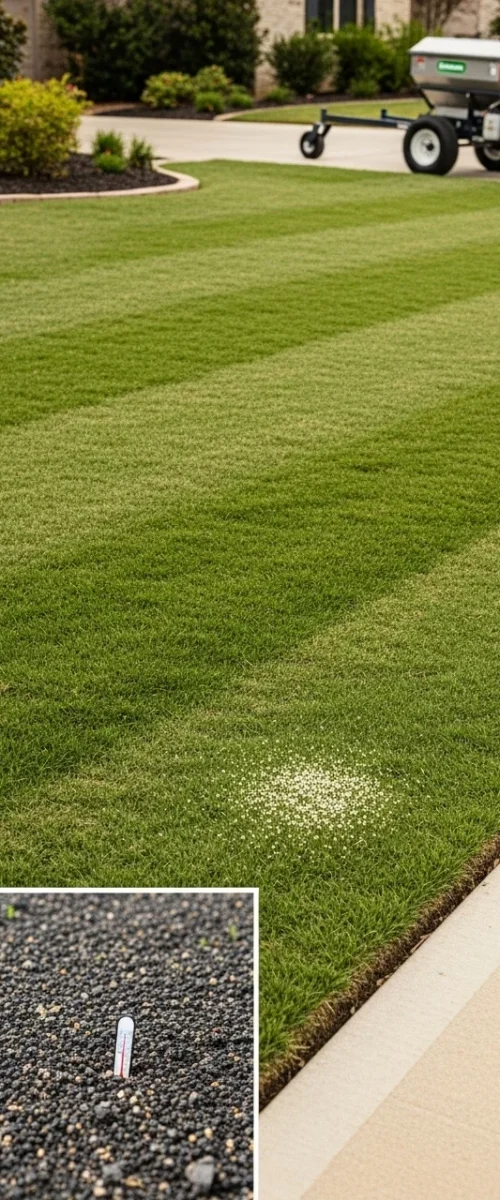
Crabgrass, dandelions, clover, and chickweed. Pre-emergent must go down before soil temperatures reach 55 degrees, typically mid-March in Fort Worth. Once crabgrass germinates, pre-emergent won’t stop it.
Summer Weeds (June through August):
Nutsedge, goosegrass, and dallisgrass. These require targeted post-emergent treatments. Nutsedge in particular needs a specialized herbicide since standard broadleaf products won’t control it.
Fall and Winter Weeds (September through February):
Henbit, annual bluegrass, and chickweed. A fall pre-emergent application in September or October prevents these from taking over during your lawn’s dormant period.
Black Hill integrates pre-emergent and post-emergent weed control into every fertilization program. Pre-emergent goes down on a schedule based on soil temperature, not a fixed calendar date. Post-emergent spot treatments handle anything that breaks through between visits.
What's Included in Every Lawn Treatment Visit
Every visit follows the same process regardless of lawn size:
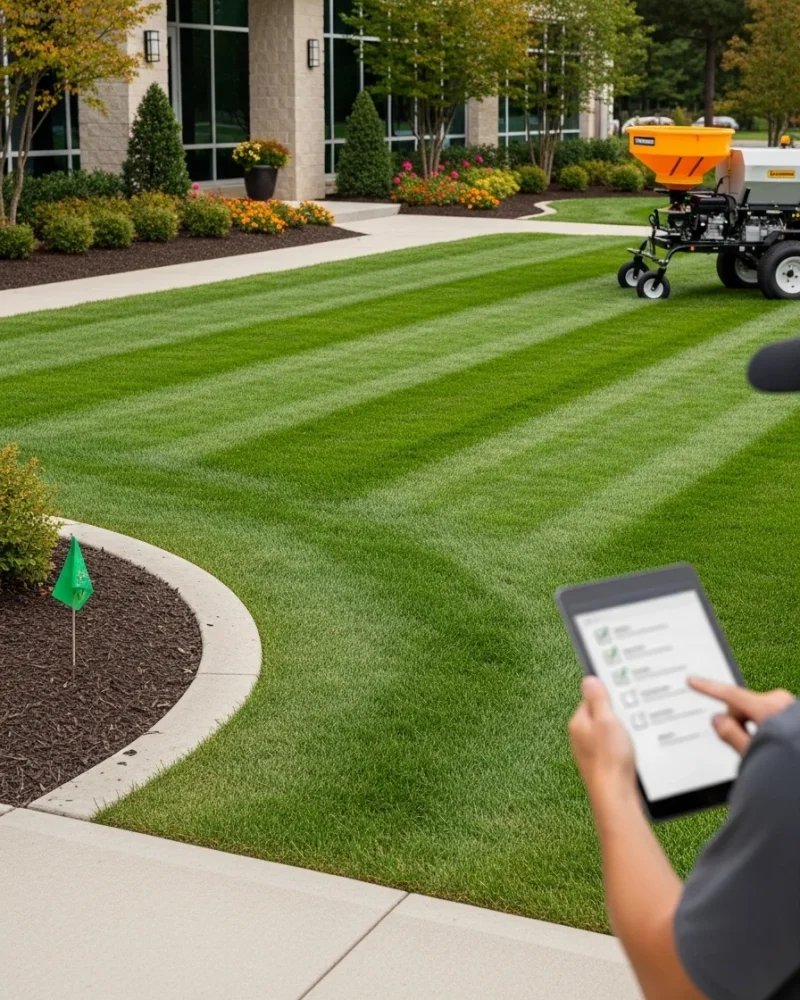
- Product Application. Fertilizer or herbicide applied at the correct rate for your grass type. No over-application. No missed sections.
- Weed Monitoring. Your lawn is walked and inspected for weed pressure. Spot treatments applied where needed. If weed activity has changed since the last visit, the plan is adjusted.
- Irrigation Coordination. We time applications around your watering schedule to maximize absorption. If your irrigation isn’t reaching an area properly, we’ll let you know.
Fertilization and Weed Control by Grass Type in Fort Worth
Different grasses need different nutrient programs. What works for Bermuda can stress St. Augustine, and vice versa. Black Hill adjusts fertilization rates, product types, and application timing based on your specific turf.
- Bermuda Grass. The most common lawn grass in Fort Worth. Bermuda is aggressive, heat-tolerant, and responds well to nitrogen. It needs 3 to 4 pounds of nitrogen per 1,000 square feet annually, spread across the growing season. Mow low and fertilize consistently for the best results.
- St. Augustine. Shade-tolerant and popular in Fort Worth yards with tree cover. St. Augustine needs less nitrogen than Bermuda (2 to 3 pounds per 1,000 square feet annually) and is more sensitive to certain herbicides. Product selection matters.
- Zoysia. Dense, slow-growing, and drought-tolerant. Zoysia needs moderate fertilization and is sensitive to over-application. Lower nitrogen rates with a focus on potassium for root strength.
Frequently Asked Questions
How often should I fertilize my lawn in Fort Worth?
Most Fort Worth lawns benefit from 5 to 7 fertilizer applications per year, spaced across the growing season. The exact schedule depends on your grass type, soil conditions, and how your lawn responds. Bermuda grass can handle more frequent feeding than St. Augustine or Zoysia. Black Hill designs a custom schedule based on a soil assessment of your property.
When should pre-emergent be applied in Fort Worth?
The first pre-emergent application should go down in early to mid-March, before soil temperatures consistently reach 55 degrees. This prevents crabgrass and other spring weeds from germinating. A second pre-emergent application in September or October targets cool-season weeds like henbit and annual bluegrass. Timing varies year to year, which is why Black Hill Landscaping monitors soil temperature rather than following a fixed calendar date.
How much does lawn fertilization and weed control cost in Fort Worth?
Pricing depends on lawn size, grass type, soil condition, and the number of applications in your program. After an on-site assessment, Black Hill Landscaping provides a transparent scope with no hidden costs. Most residential programs are priced on a per-visit or annual basis.
What's the difference between pre-emergent and post-emergent weed control?
Pre-emergent prevents weed seeds from germinating. It has to be applied before weeds appear. Post-emergent kills weeds that are already growing. An effective weed control program uses both. Pre-emergent on a schedule to prevent the majority of weeds, and post-emergent spot treatments for anything that breaks through.
Why is my lawn full of weeds even though I fertilize it?
Fertilizer feeds your grass, but it doesn’t prevent or kill weeds. Without pre-emergent and post-emergent treatments, weeds will compete with your turf for nutrients, water, and sunlight. A fertilization-only program without integrated weed control is solving half the problem.
What types of weeds are most common in Fort Worth lawns?
The most common lawn weeds in Fort Worth include crabgrass (spring/summer), nutsedge (summer), dandelions (spring), henbit (fall/winter), annual bluegrass (fall/winter), chickweed (cool season), clover (spring), and goosegrass (summer). Each weed has a specific germination window and requires the right treatment at the right time.