
Residential & Commercial De-Icing Services
Commercial and residential routes are planned around the surfaces and access each property needs during freezing weather.
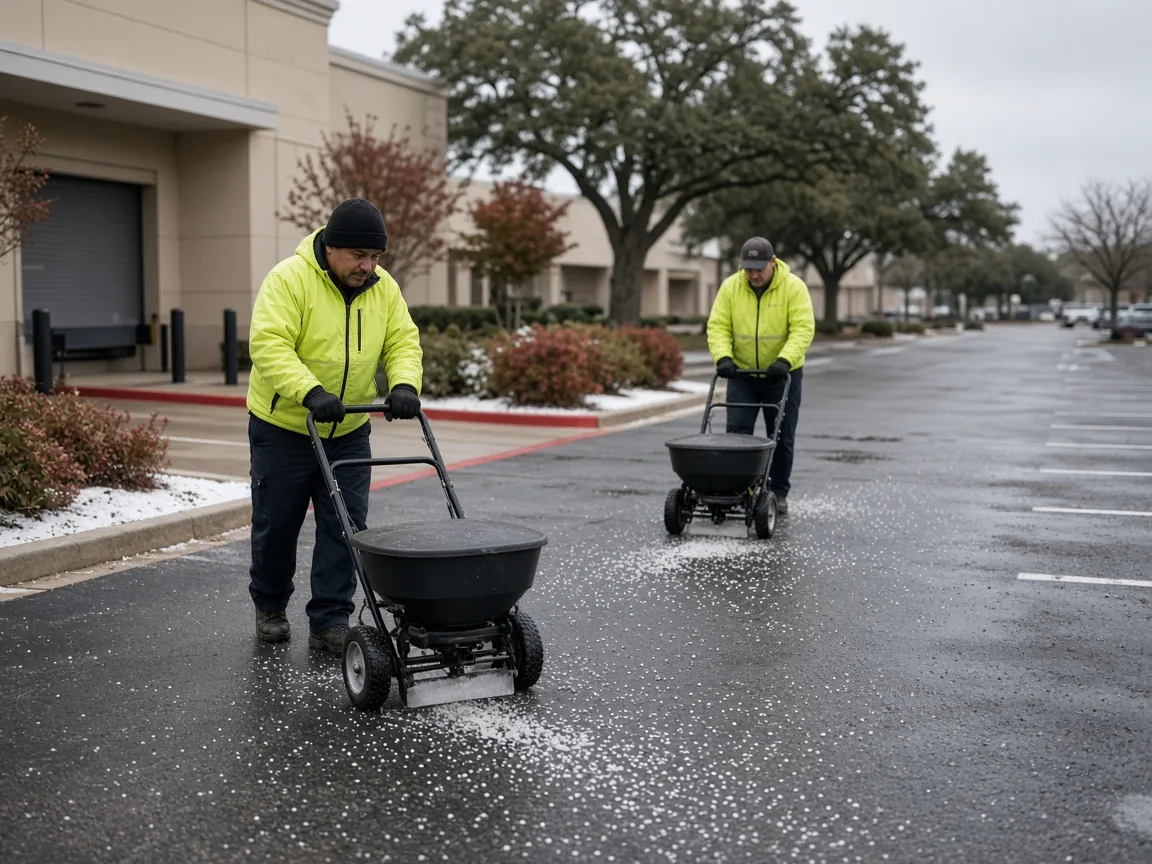
Commercial
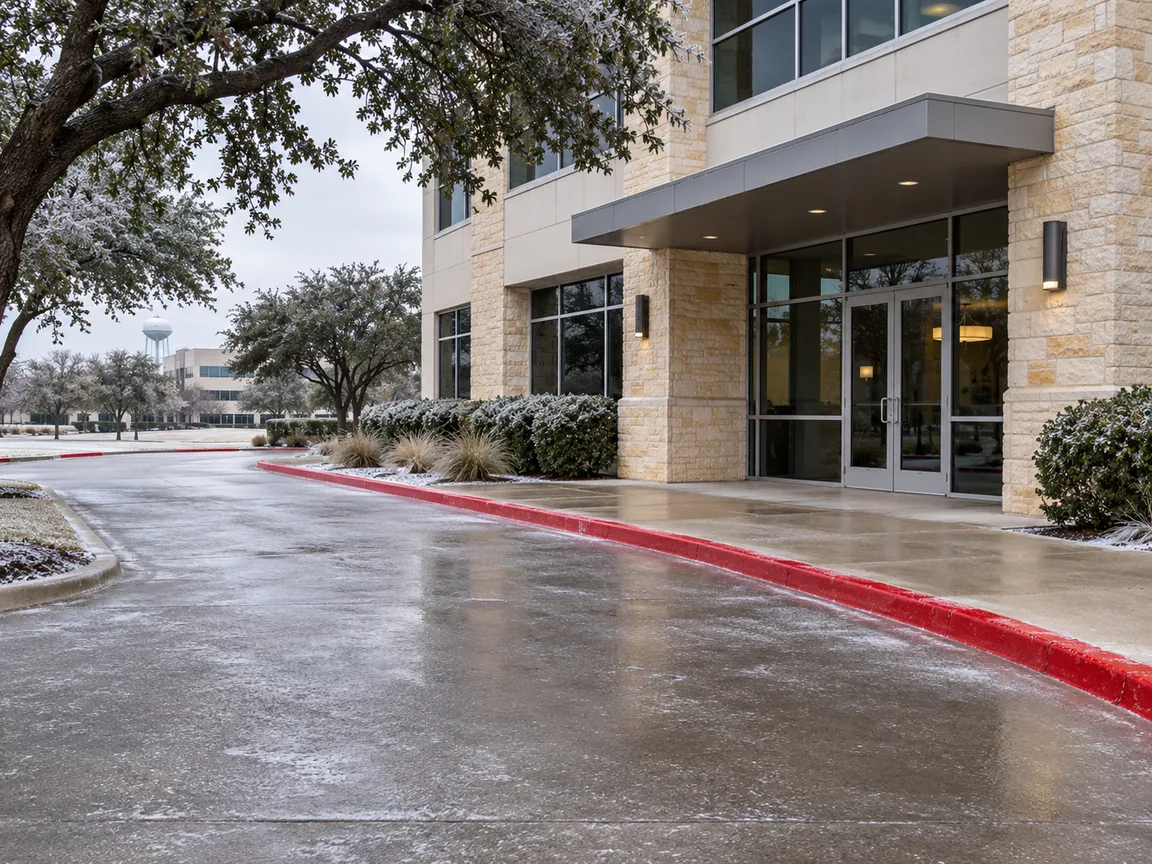
Commercial De-Icing: Lots, Entries & Walkways
Property managers and facilities teams agree on weather triggers, priority surfaces, and service scope in writing before winter.
- Parking lots, drive lanes, loading docks, and fire lanes
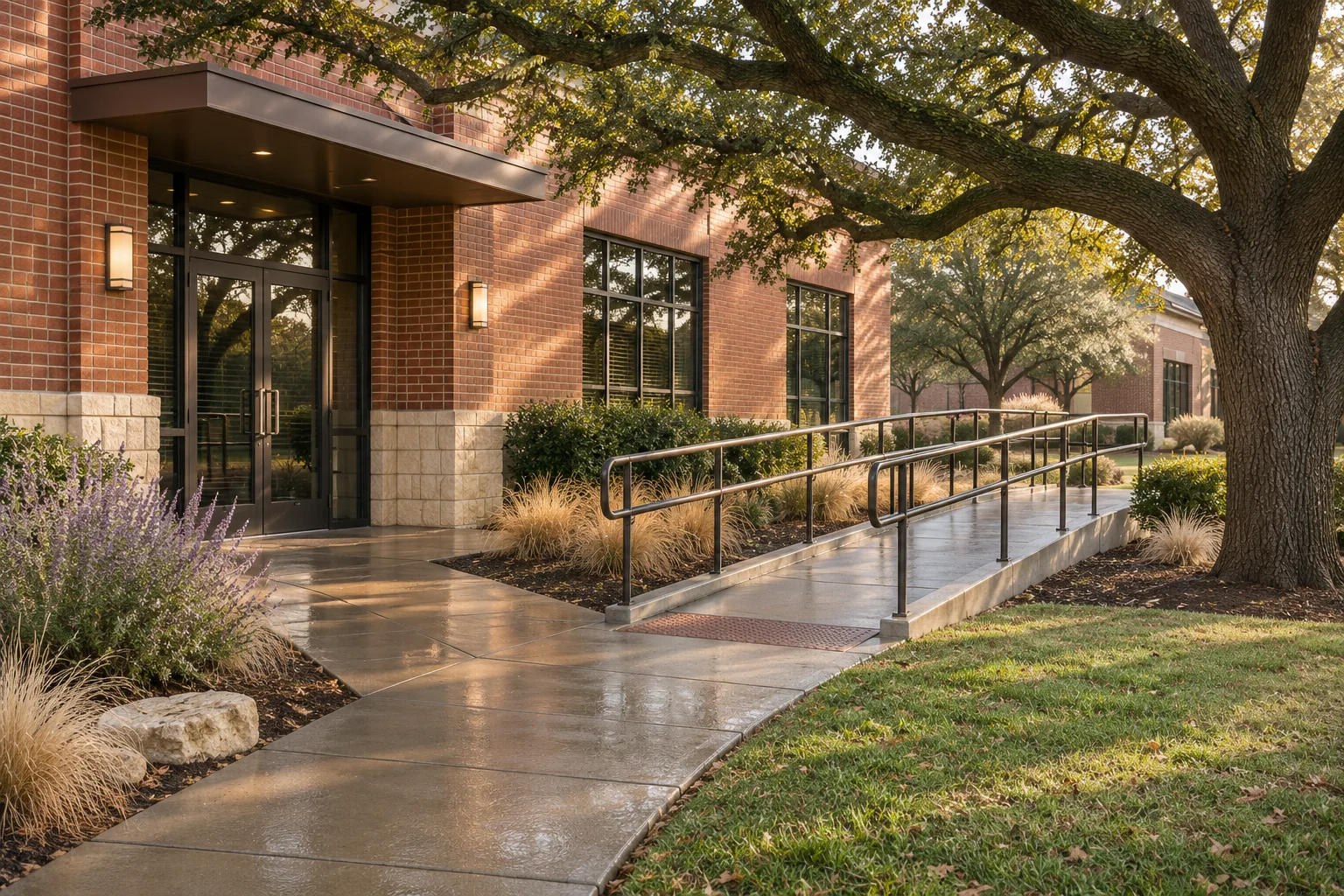
- Entries, sidewalks, ramps, and accessible routes first
- Salting before a freeze warning is issued, based on written site triggers
- Salt treatment for agreed priority surfaces, with follow-up checks when conditions warrant
Residential
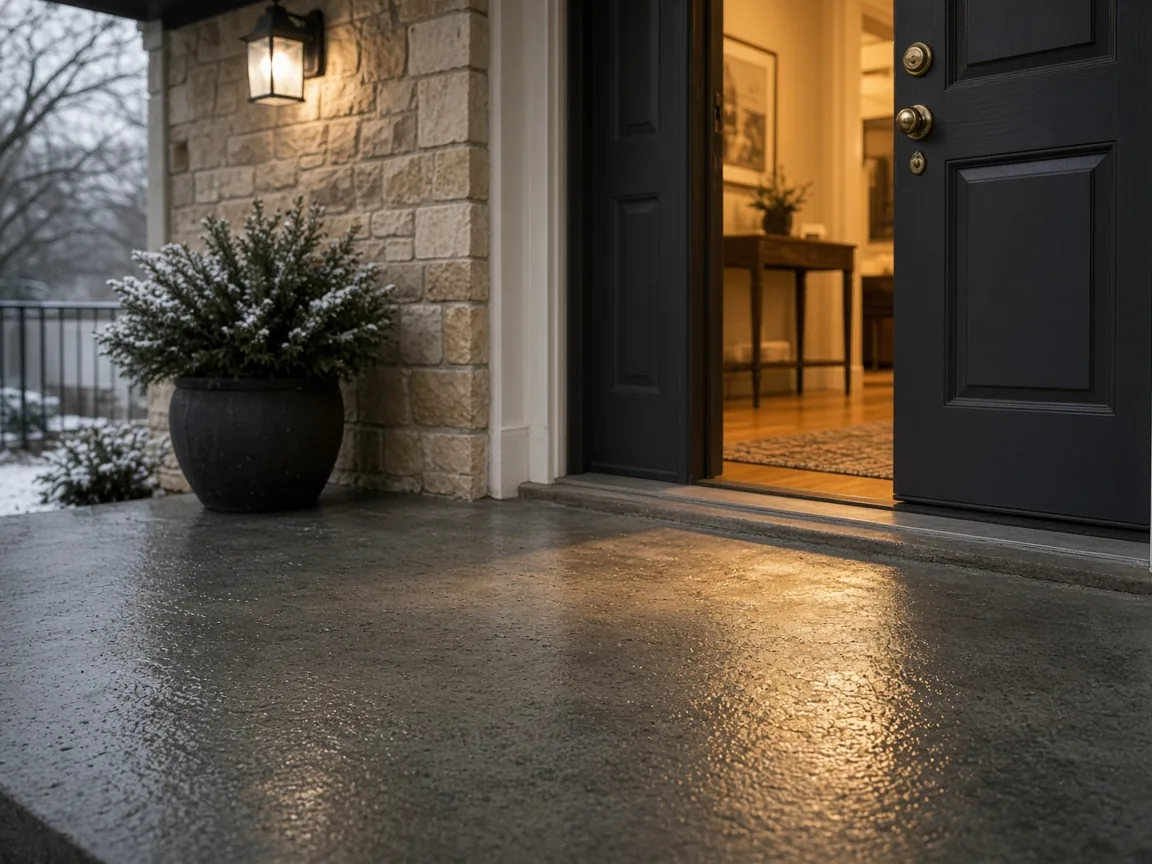
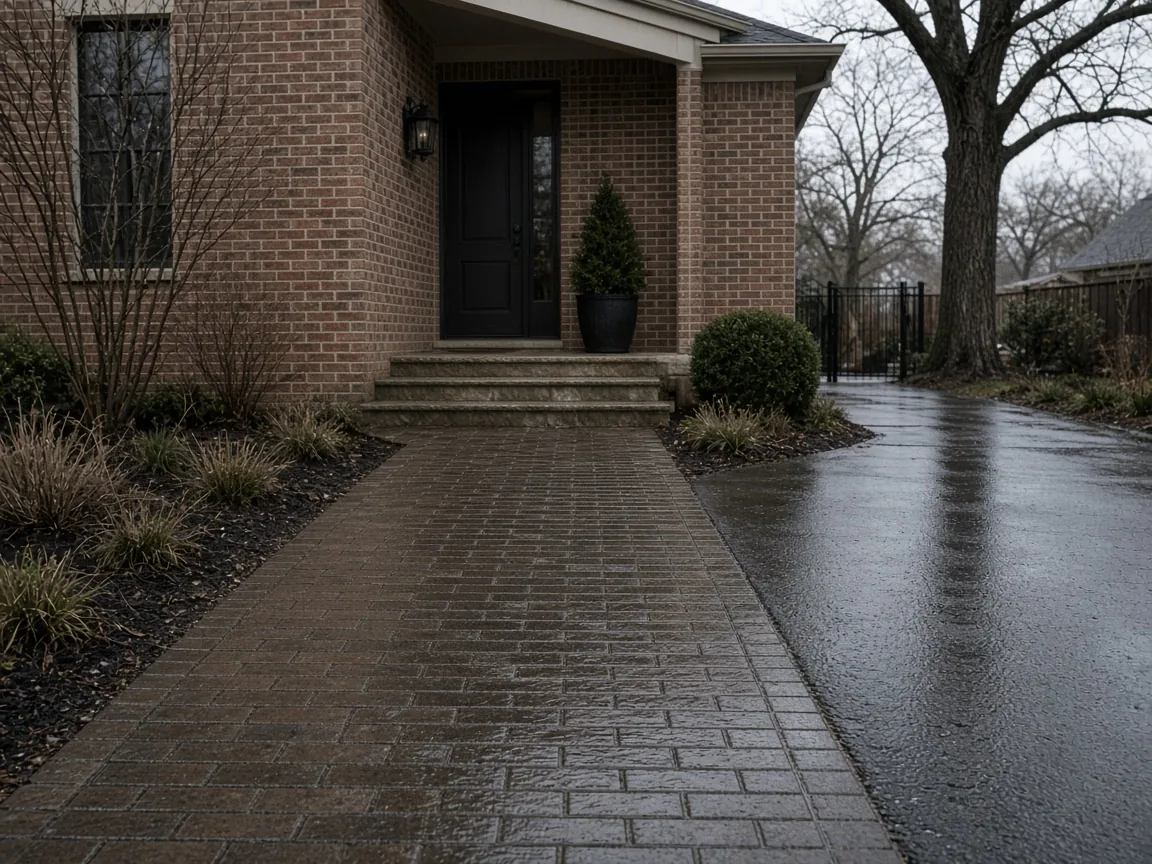
Residential De-Icing: Driveways, Walks & Steps
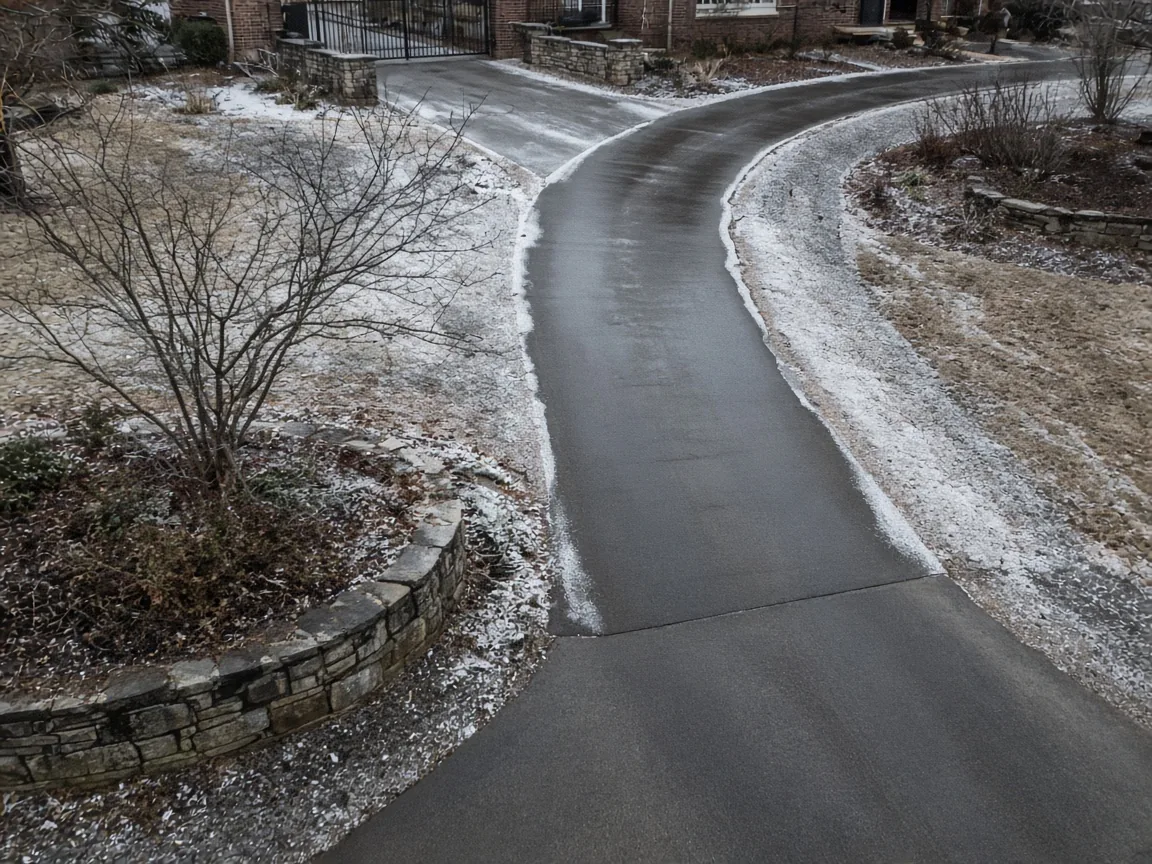
Homeowner support focuses on ice and glaze on driveways, walks, and steps, with a separate residential service route.
- Driveways, garage aprons, and turnaround areas
- Walkways, porch steps, and front entries
- Pre-salting ahead of freeze warnings when conditions and surfaces allow
- Careful placement that protects bed edges and plantings
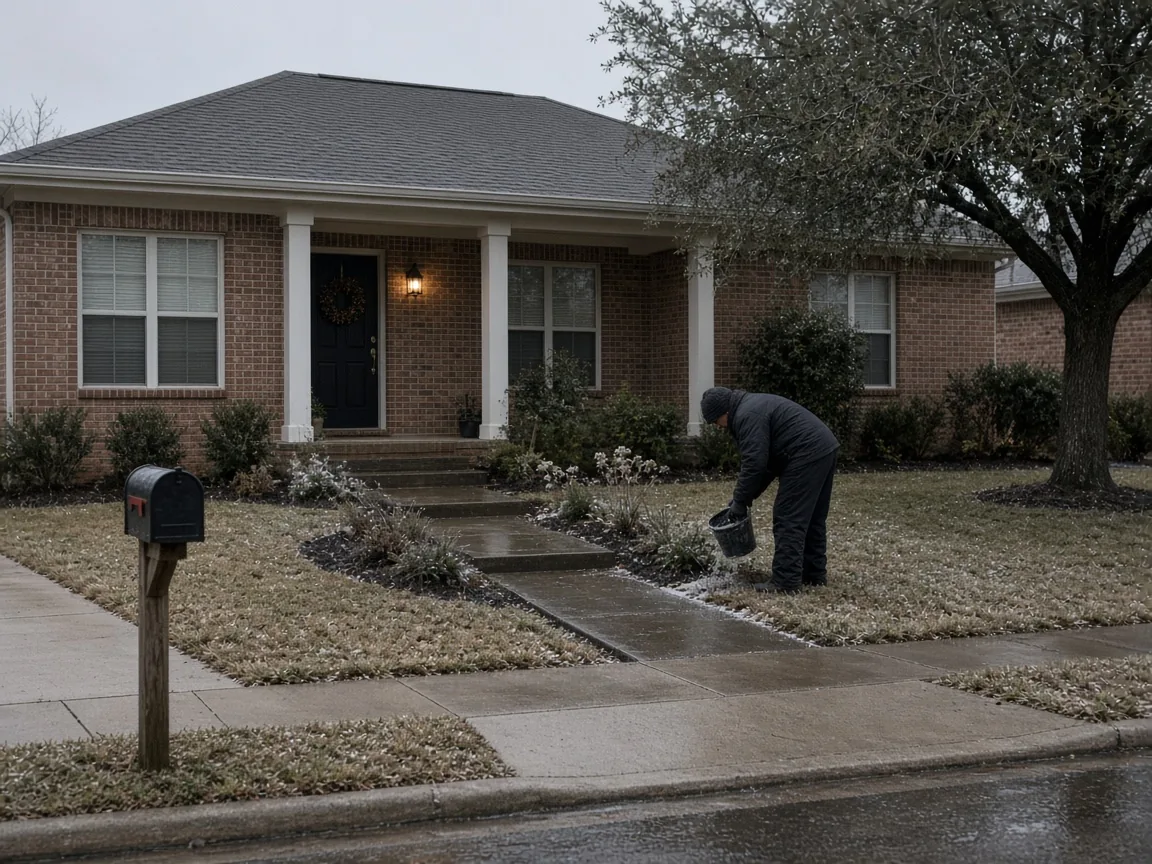
Driveway & Walkway De-Icing for Homeowners
We treat icy driveways, walks, and steps with a de-icer suited to each surface.
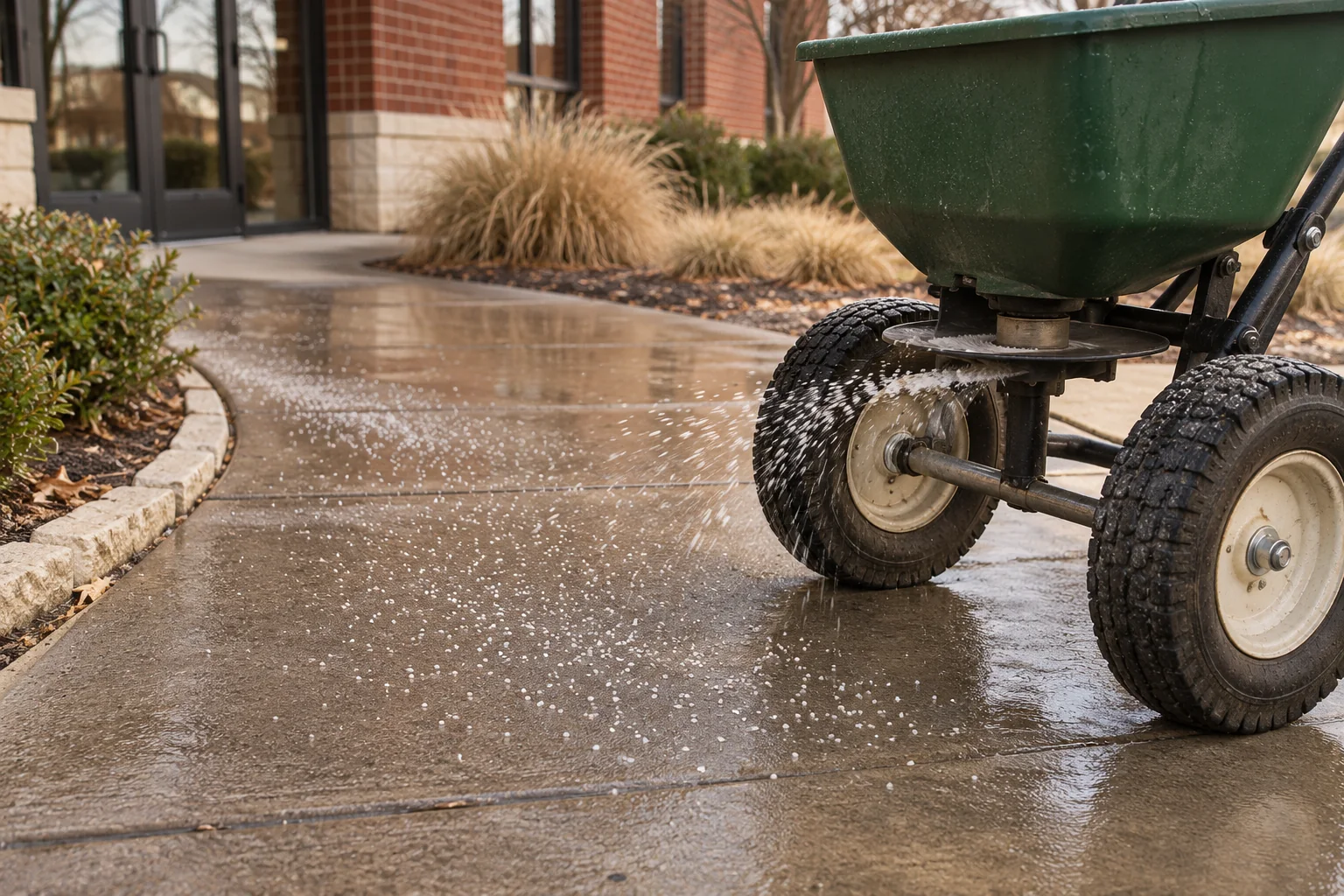
Salt for the Driveway: What We Use and Why
A shady step can stay slick long after the driveway thaws. We choose driveway salt based on the pavement and temperature, then apply it to loosen ice and improve traction. Point out slopes, shaded corners, and spots where runoff tends to refreeze.
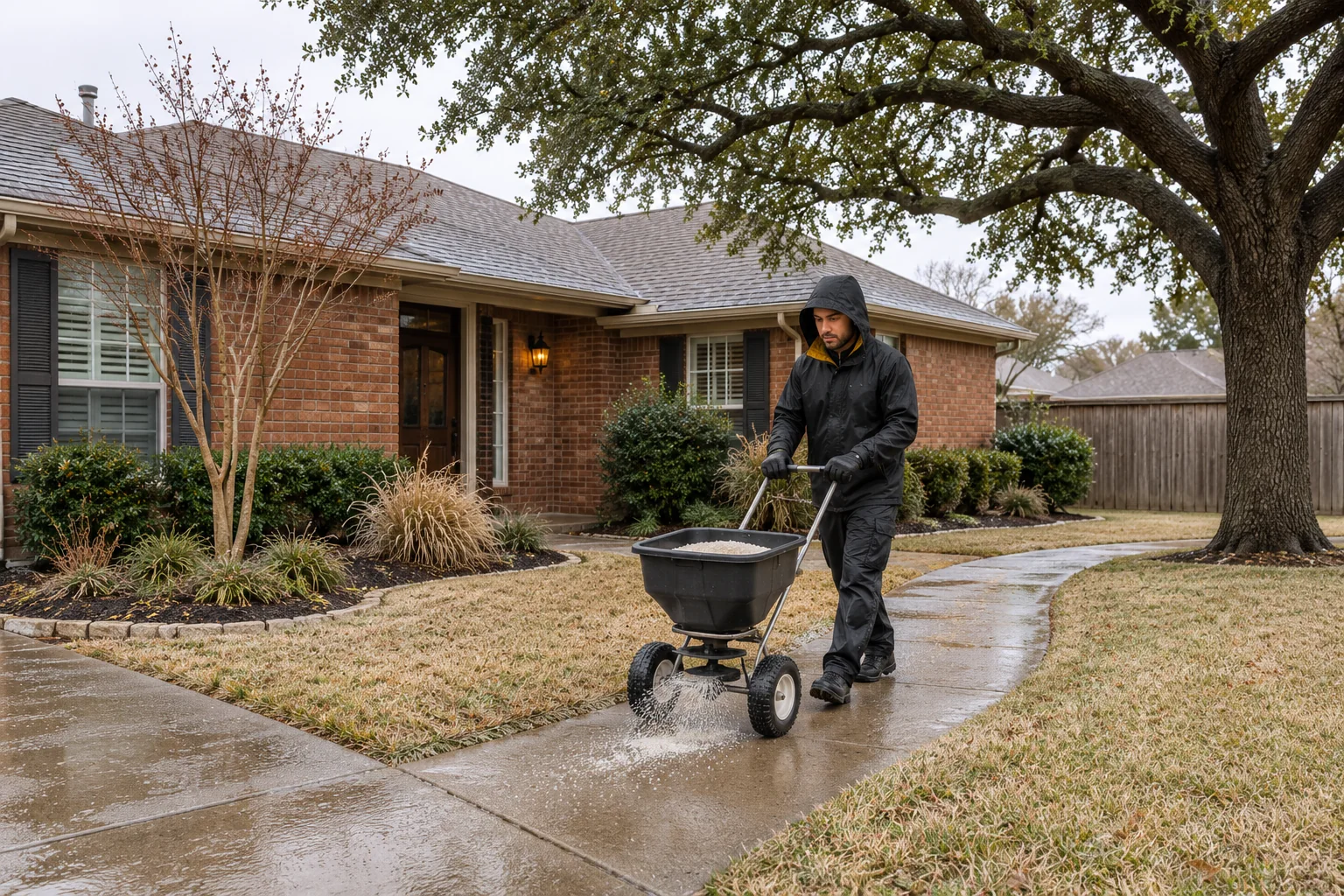
How We Melt an Icy Driveway Without Damaging Concrete
An icy driveway needs a measured dose. We match the de-icer and application rate to the concrete, temperature, and drainage. Tell us about fresh concrete or recent repairs before we treat. Even with careful application, some risk of surface damage remains.
Serving Fort Worth, Benbrook, Weatherford, Aledo & Nearby Cities
Residential and commercial de-icing support across the greater Fort Worth area. Route availability for each city is confirmed before an agreement is signed.


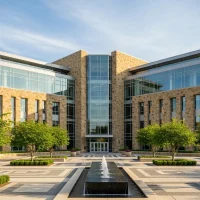
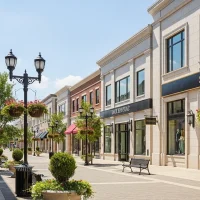



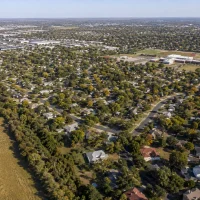
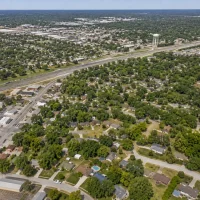
Not sure whether your address is in our de-icing service area? Send us the property location and we will check availability.
De-Icing, Salting & Ice Management Services
Services cover planned salting, ice treatment, priority walkways, and follow-up when freezing conditions warrant it. Home and commercial properties are planned on separate routes.
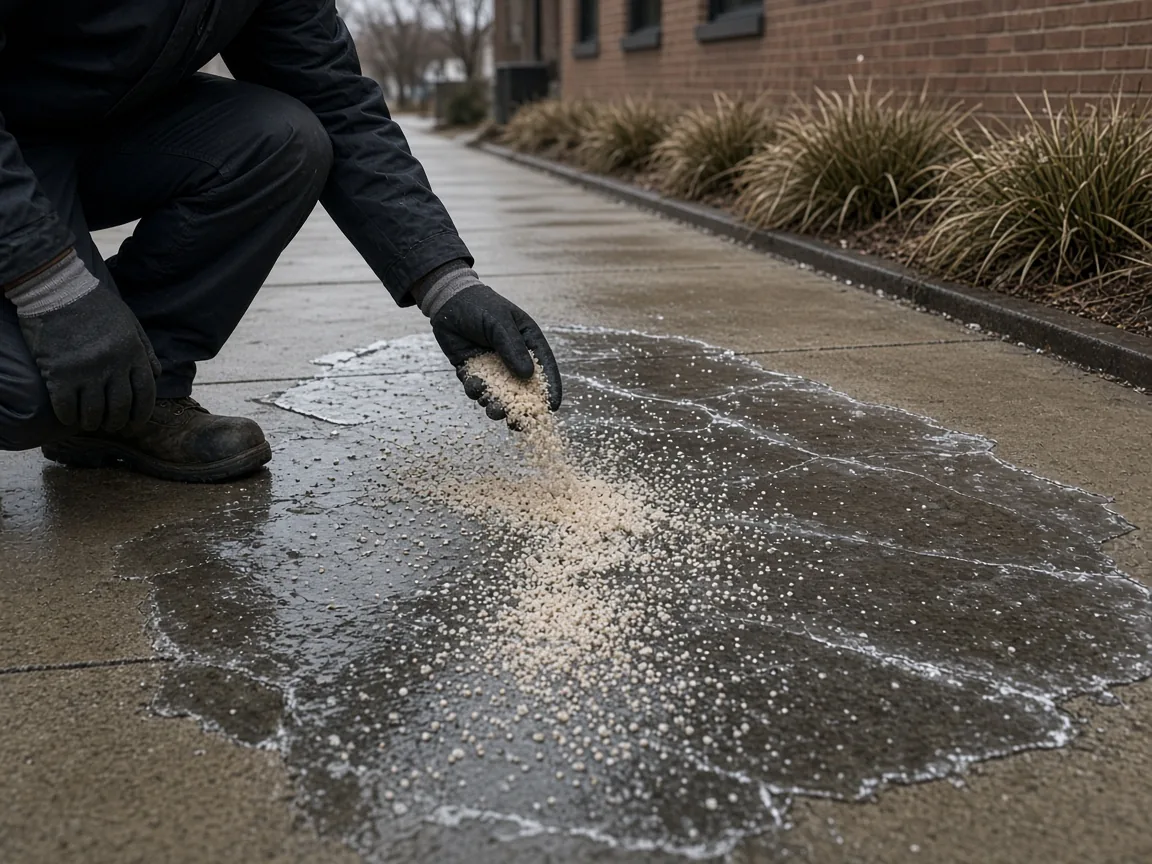
De-Icing & Ice Removal
Salt and ice-melt application rates are selected for the surface and conditions. Follow-up treatment may be needed when meltwater refreezes.
- Application matched to pavement temperature, not a fixed schedule
- Black-ice focus on entries, ramps, and shaded low spots
- Overnight re-treatment logged as its own visit when needed
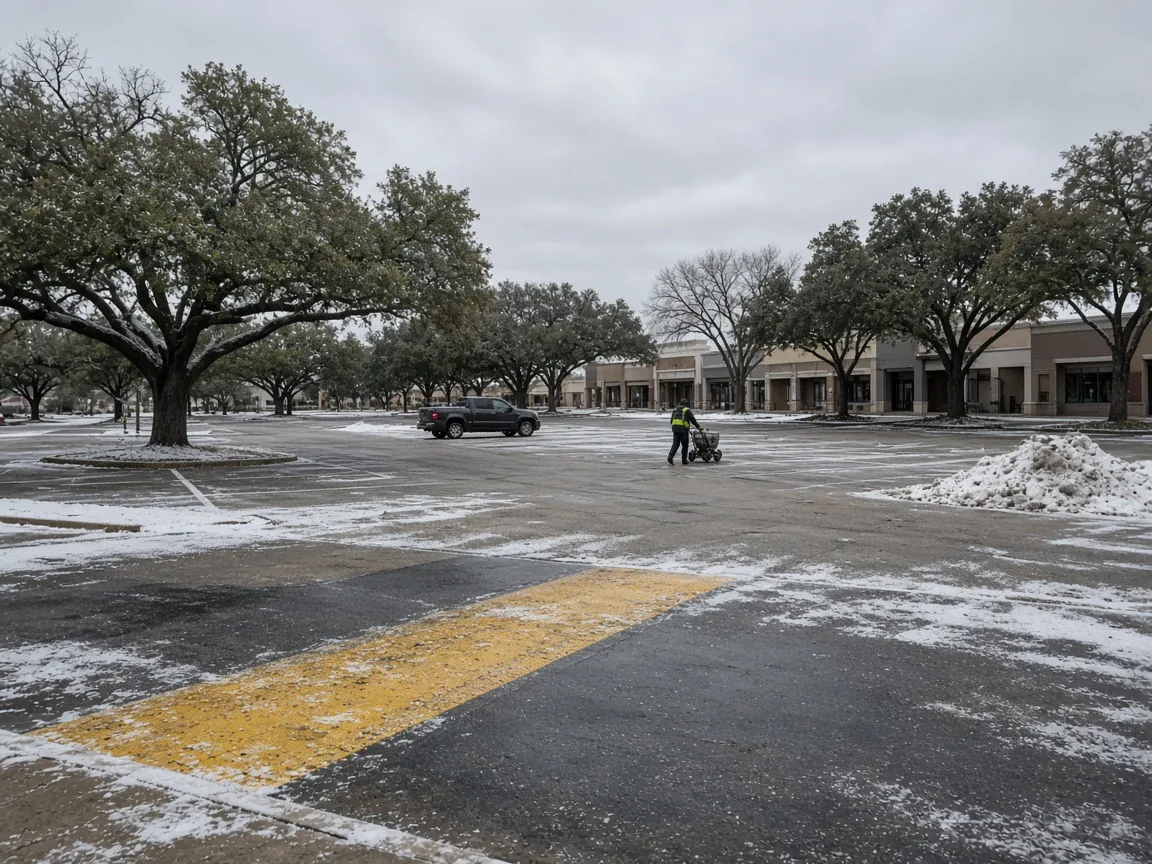
Parking Lot Ice Management
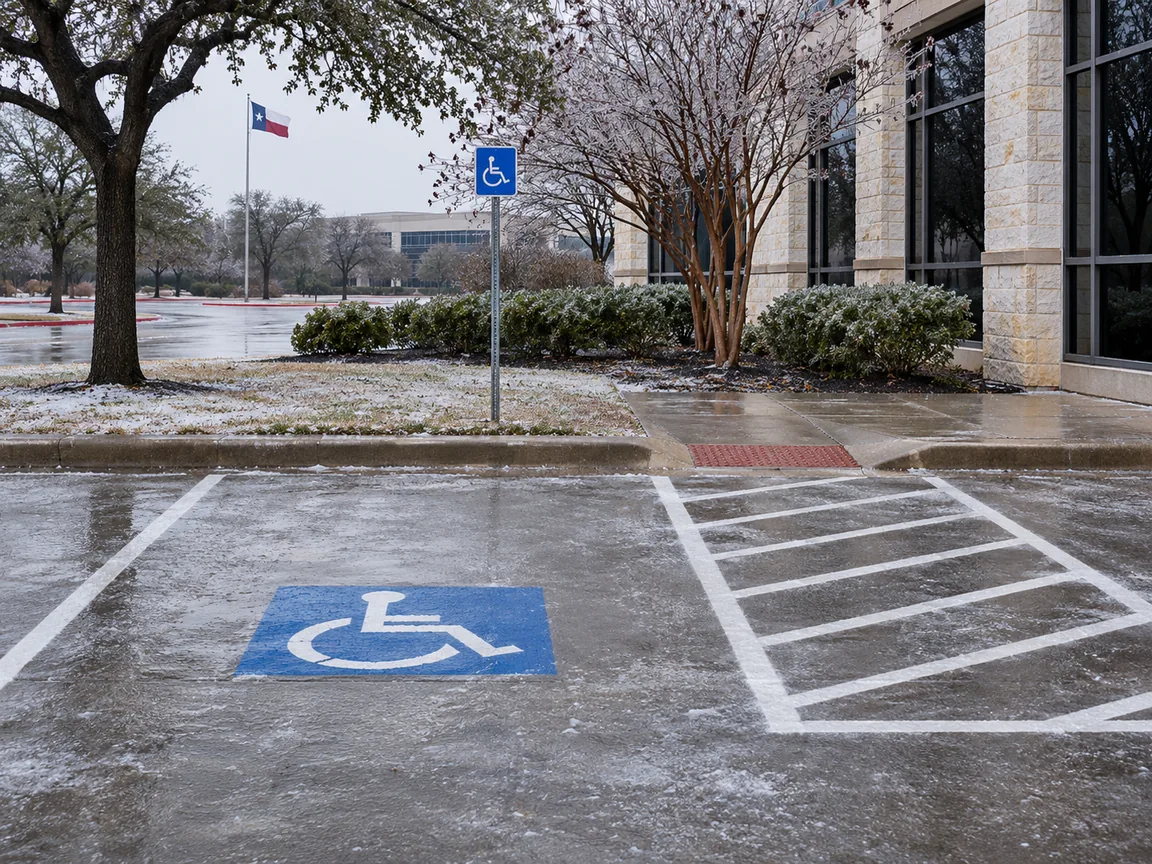
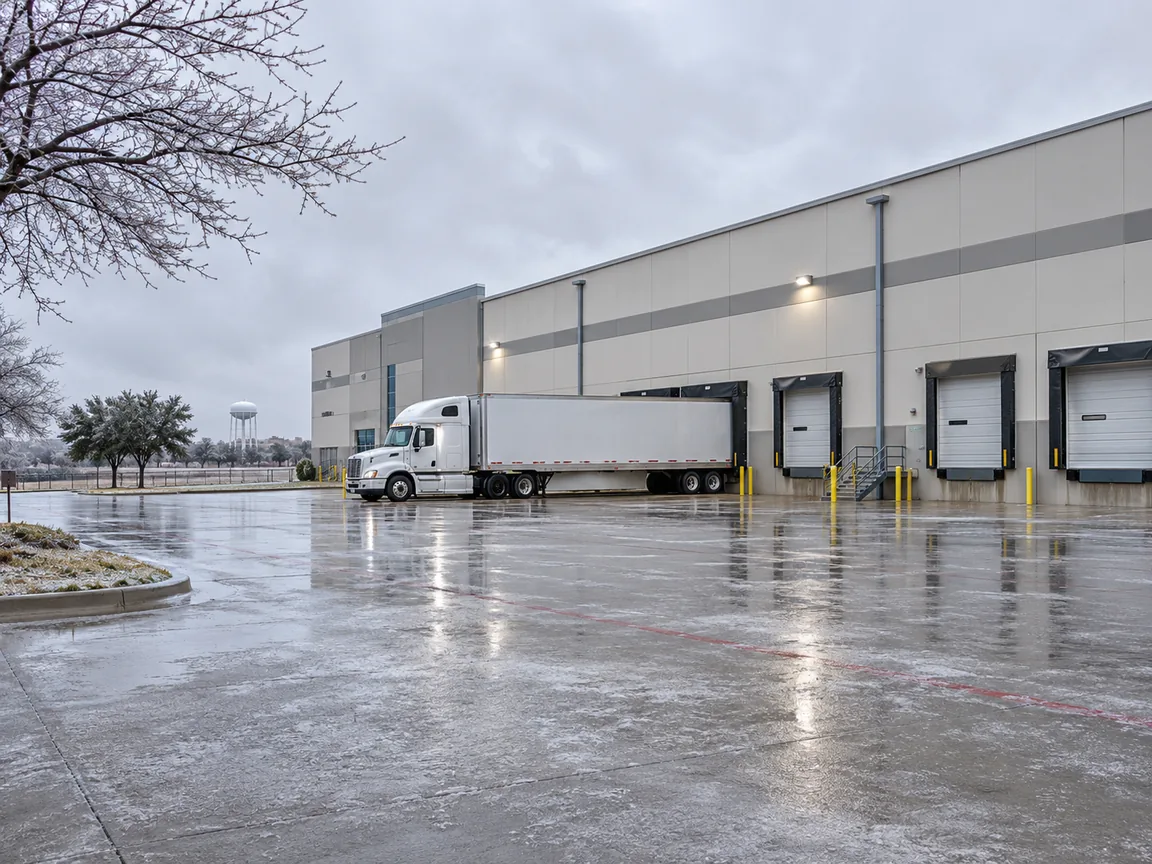
Parking-lot treatment covers drive lanes, loading areas, fire lanes, and accessible parking in an order agreed for the property.
- Fire lanes and accessible parking included in the written treatment plan
- Loading docks sequenced around delivery windows
- Treated in the agreed parking-lot sequence
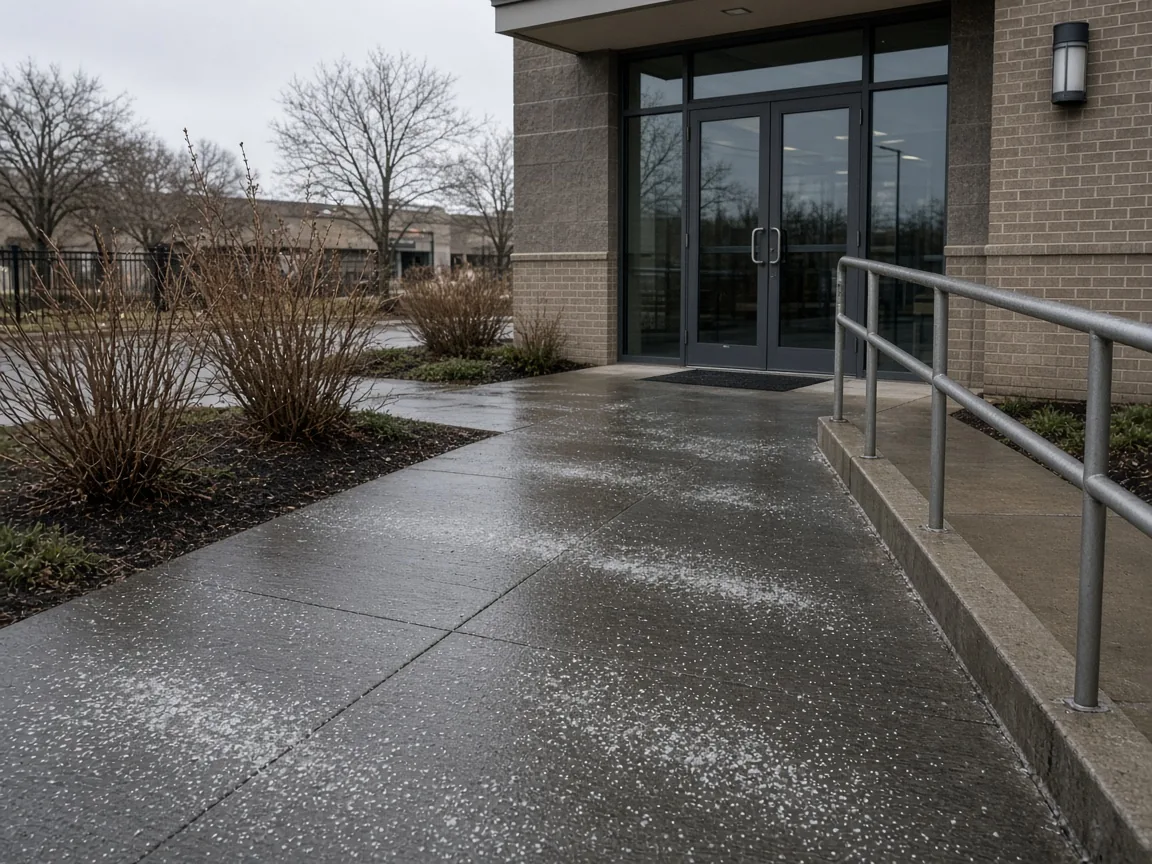
Sidewalk, walkway & entry ice management
Walkways, stairs, ramps, and building entrances are treated first in the agreed sequence.
- Entries, stairs, ramps, and thresholds treated as priority
- Accessible routes kept passable for the event duration
- Photographed after treatment when documentation is requested
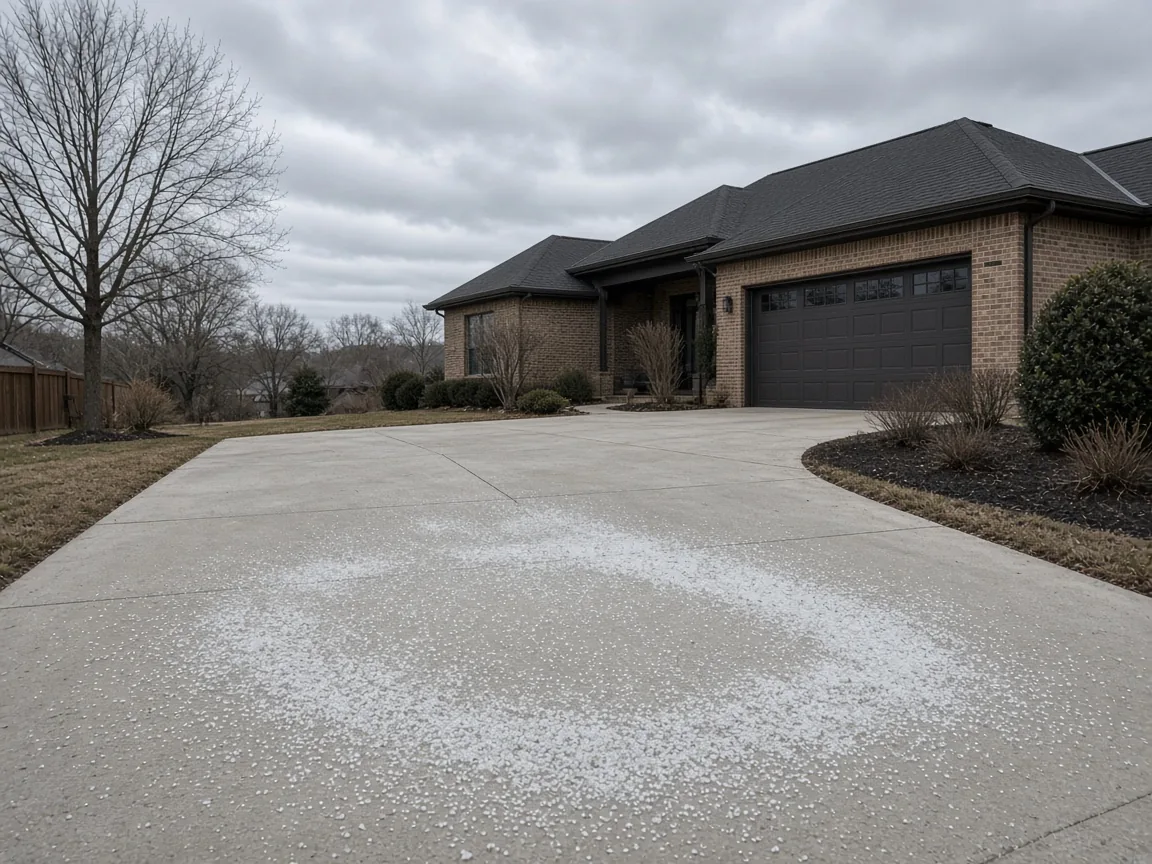
Pre-salting before a freeze
Pre-salting is scheduled ahead of freeze warnings when the surface and conditions are suitable for treatment.
- Salting before a freeze warning is issued, when conditions allow
- Entries, walkways, and drive lanes first in agreed order
- Application rate follows product directions for the surface and conditions
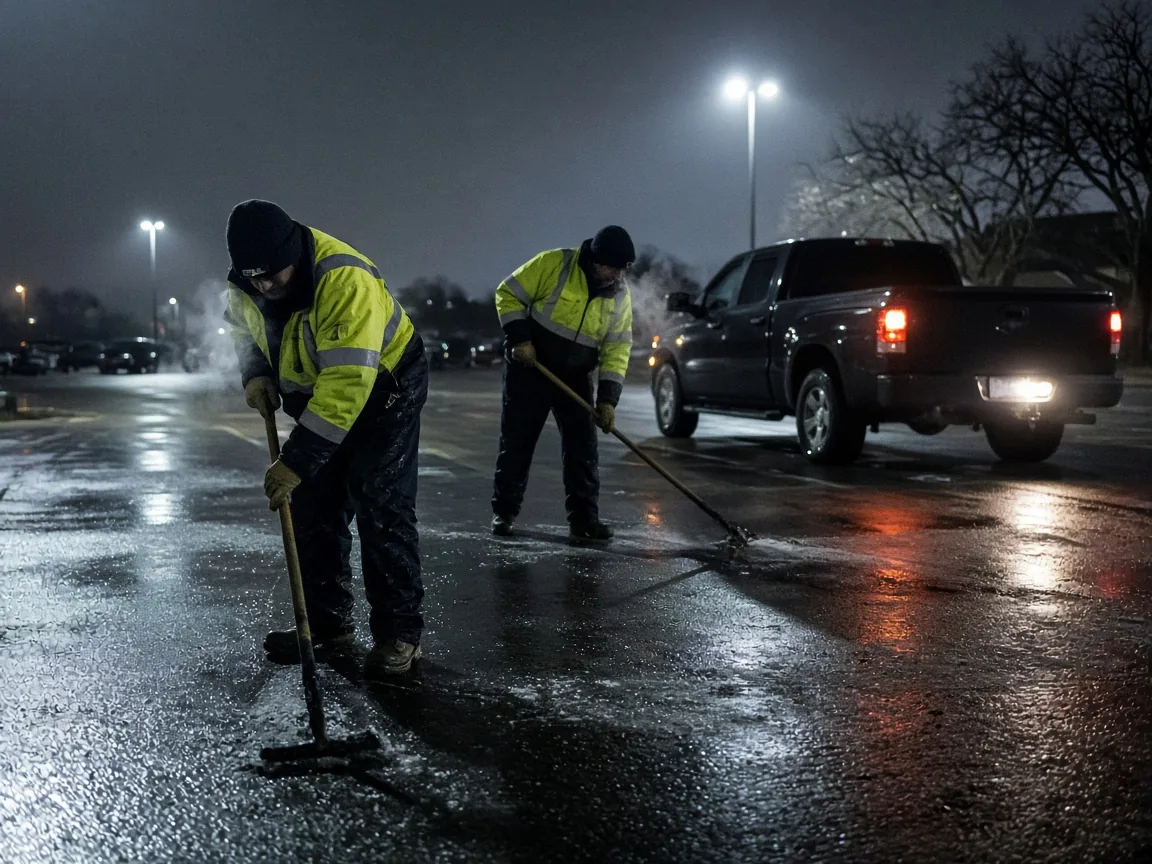
Emergency Ice Response
Black-ice response and freeze-event dispatch when conditions change faster than the forecast. Contracted properties are serviced in agreed route order first. Callouts are accepted subject to crew availability.
- Priority dispatch for the duration of a declared freeze event
- Route position agreed before the season when under contract
- Clear timing communication rather than estimates we cannot hold
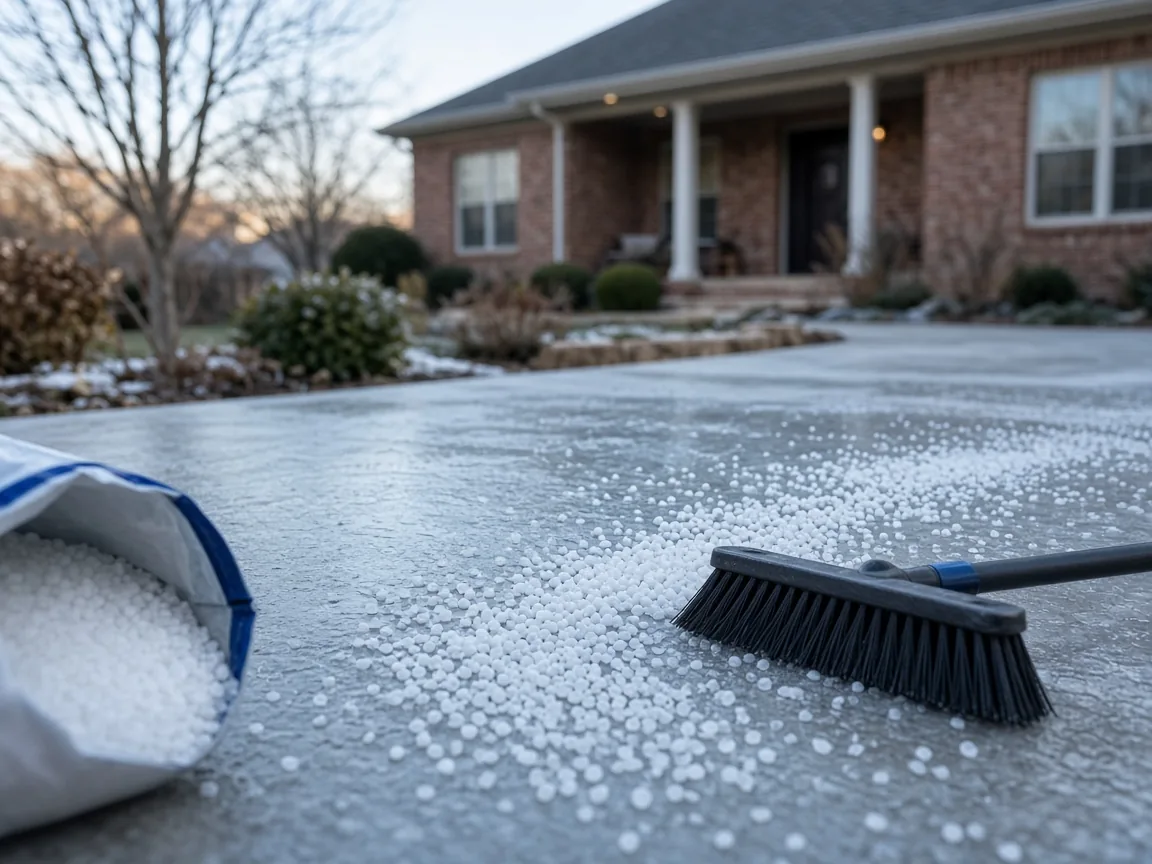
Residential Driveways, Walks & Steps
Residential de-icing covers driveways, front walks, and entry steps, with a separate route from commercial properties.
- Driveways, garage approaches, front walks, and entry steps
- Treatment chosen for concrete and nearby plantings
- Separate residential route so neither side waits on the other
Ice Management for HOAs, Medical, Retail & Office Properties
Different properties have different people, hours, and routes to consider. We build the treatment sequence around access needs shared during the site review.
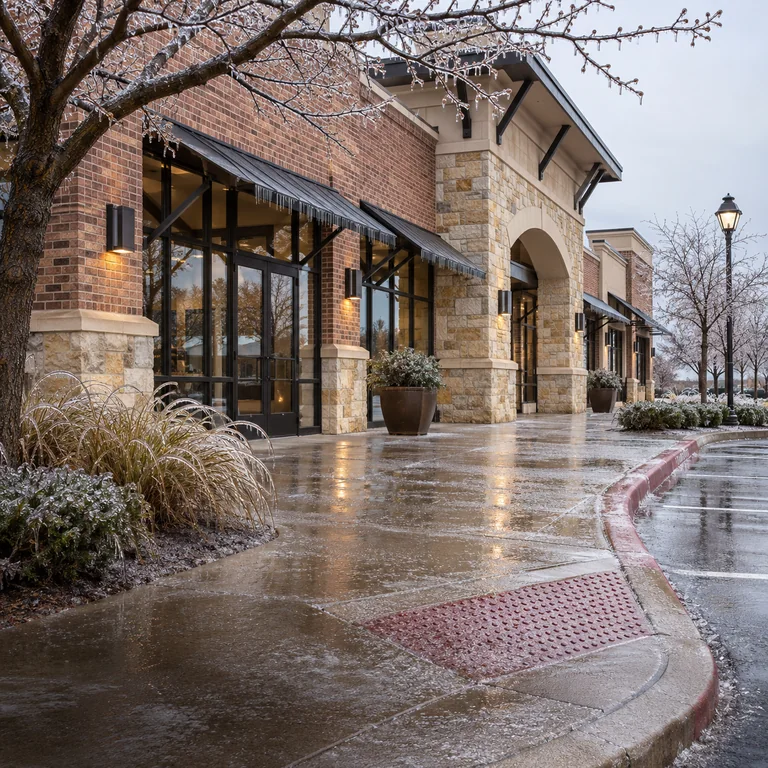
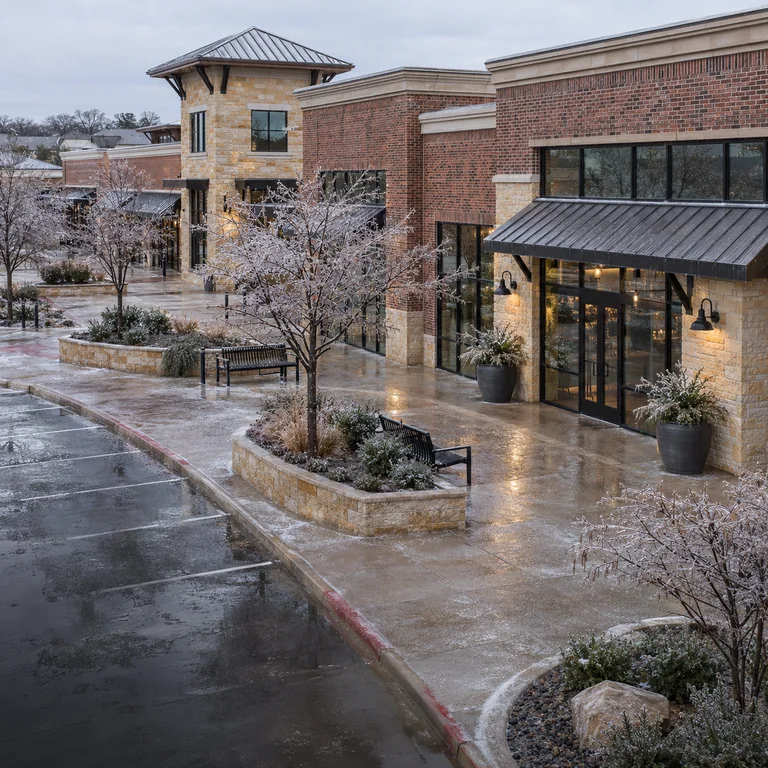
Retail & Shopping
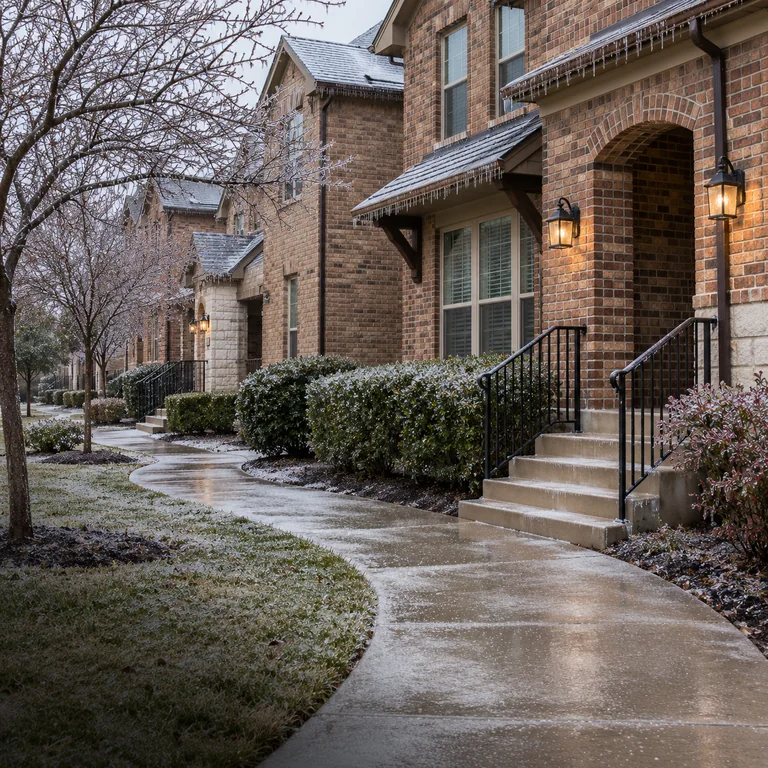
HOA & Multifamily
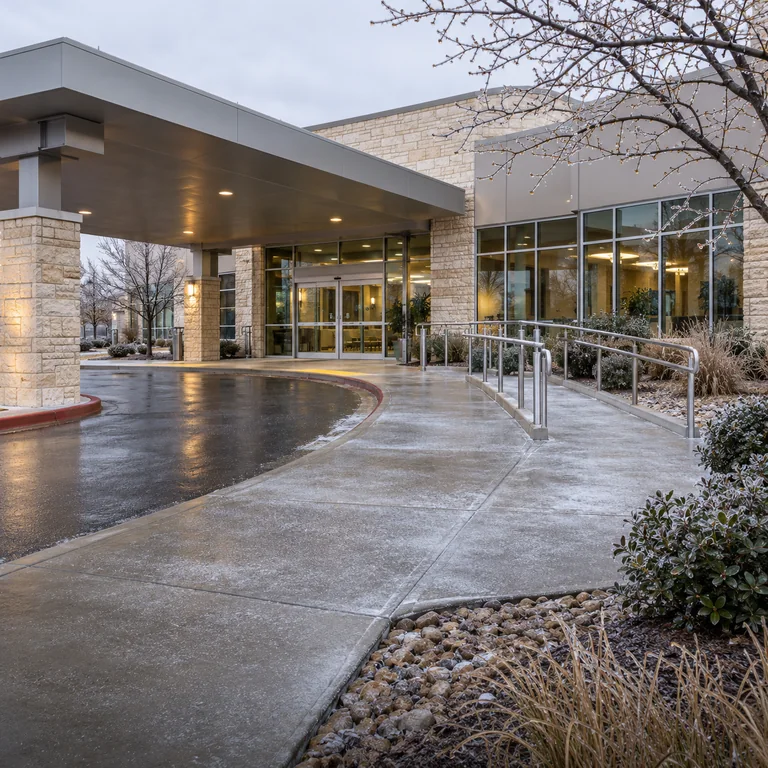
Medical & Healthcare
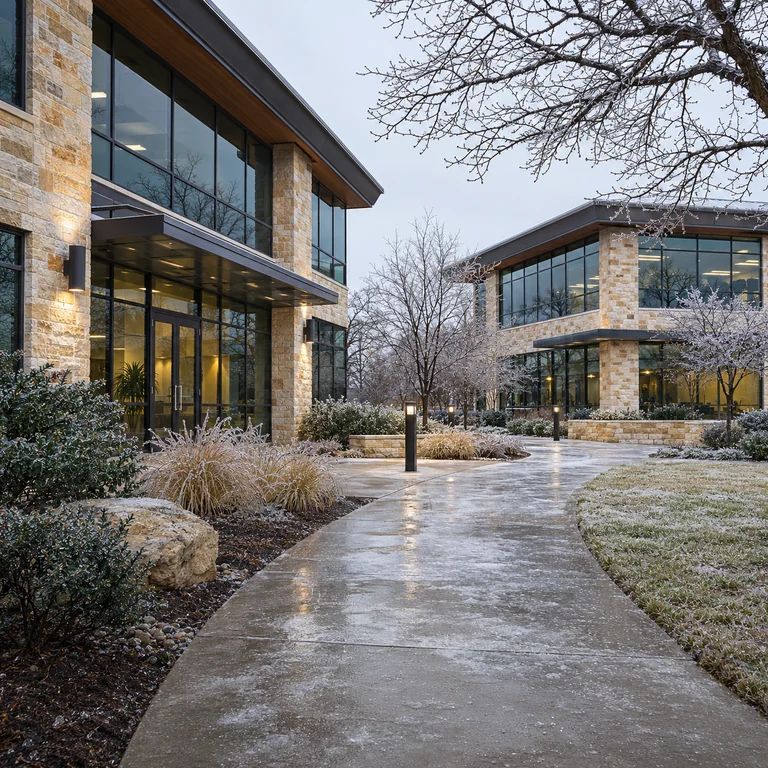
Office Parks
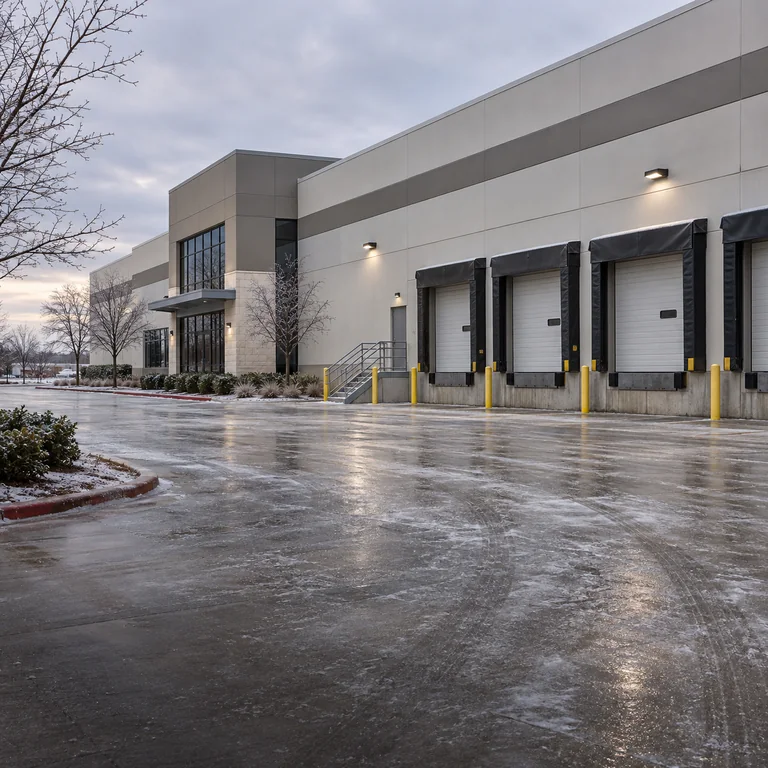
Warehouse & Industrial
Property Management Portfolios
Parking Lot, Sidewalk & Entry Priority Order
Each surface carries different access and safety needs. The treatment order and weather triggers are agreed in writing before the season.
How Our Freeze-Event Process Works
The sequence starts with the written property plan and agreed weather triggers. Residential and commercial visits follow their own routes.
T-72h Forecast watch
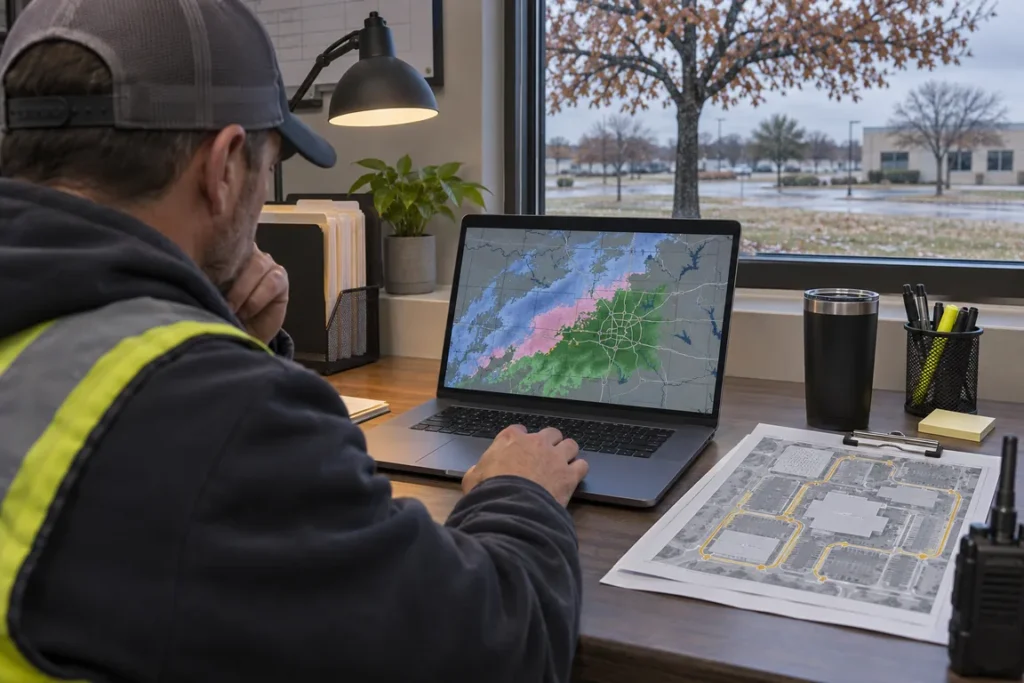
72 Hours Out: Freeze Forecast Monitoring
Freeze watches are tracked early. Contracted properties are already sequenced into a route so nothing has to be invented once precipitation is on the radar.
- Route order set from the pre-season site plan
- Material staged before the first property needs it
- You are notified a crew is coming, not asked whether you want one
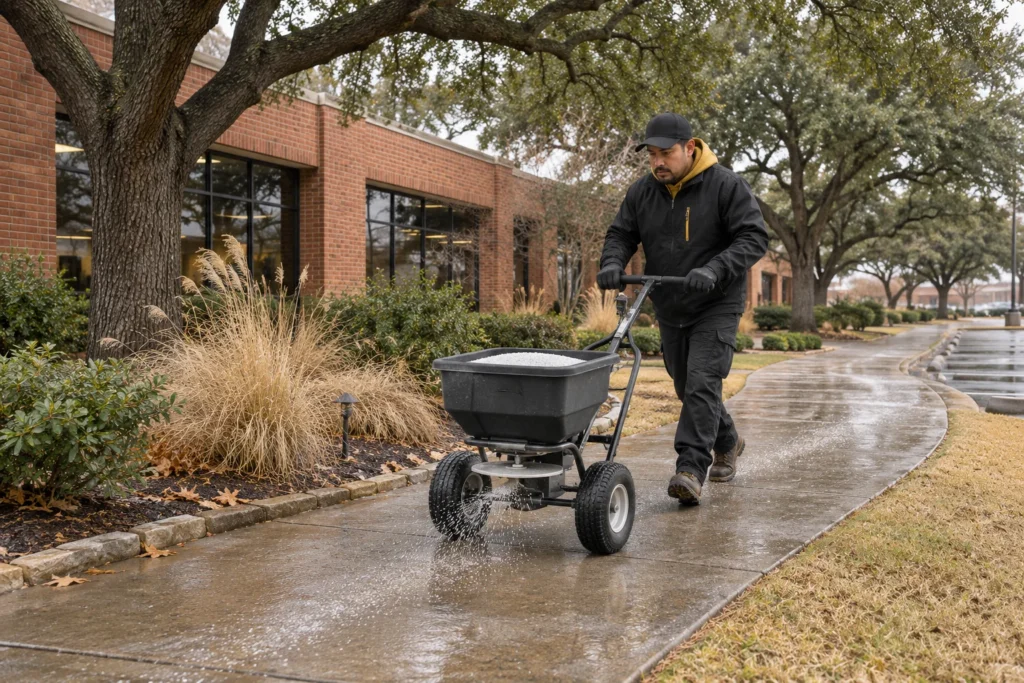
Before freeze Pre-salting
Before the Freeze: Pre-Salting Priority Surfaces
When surface and weather conditions allow, salt is applied to the priority surfaces identified in the plan.
- Applied ahead of freezing conditions when the surface is suitable
- Priority surfaces first, in the autumn-agreed sequence
- Reduces clearing time and total material used
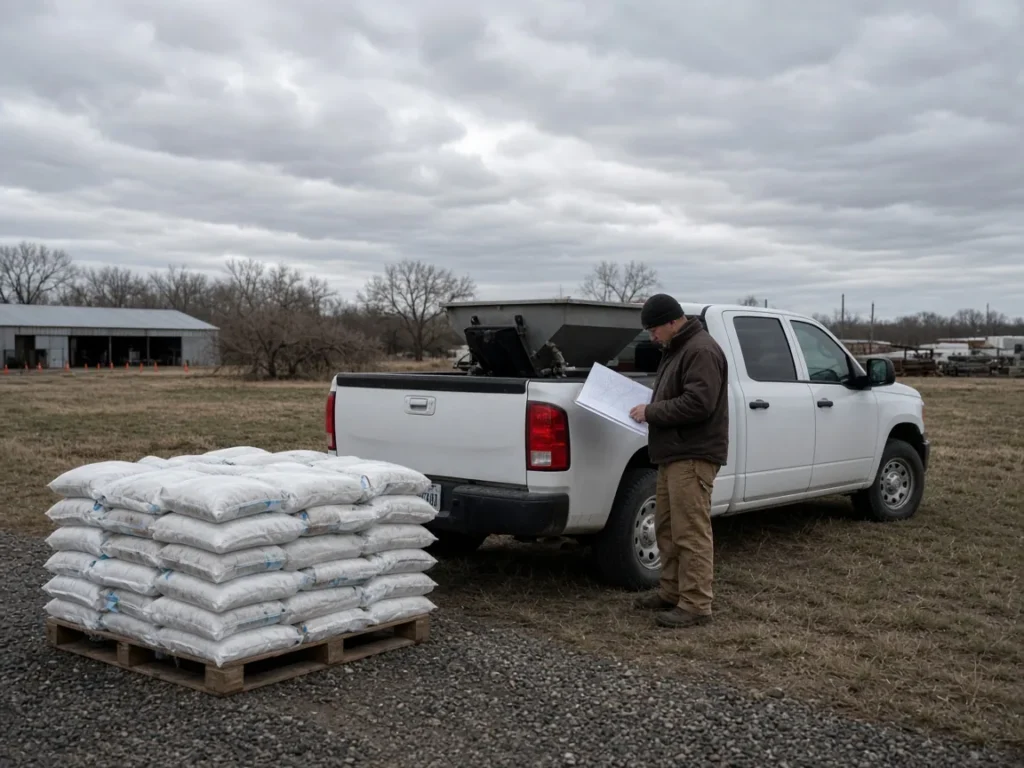
Freeze warning Dispatch
Freeze Warning Issued: Crews Dispatch
A freeze warning, freezing rain, or an agreed pavement temperature can trigger service, as documented in the property agreement.
- Dispatch follows the written weather trigger
- Contracted properties ahead of non-contracted callouts
- Arrival can be logged when the crew is on site
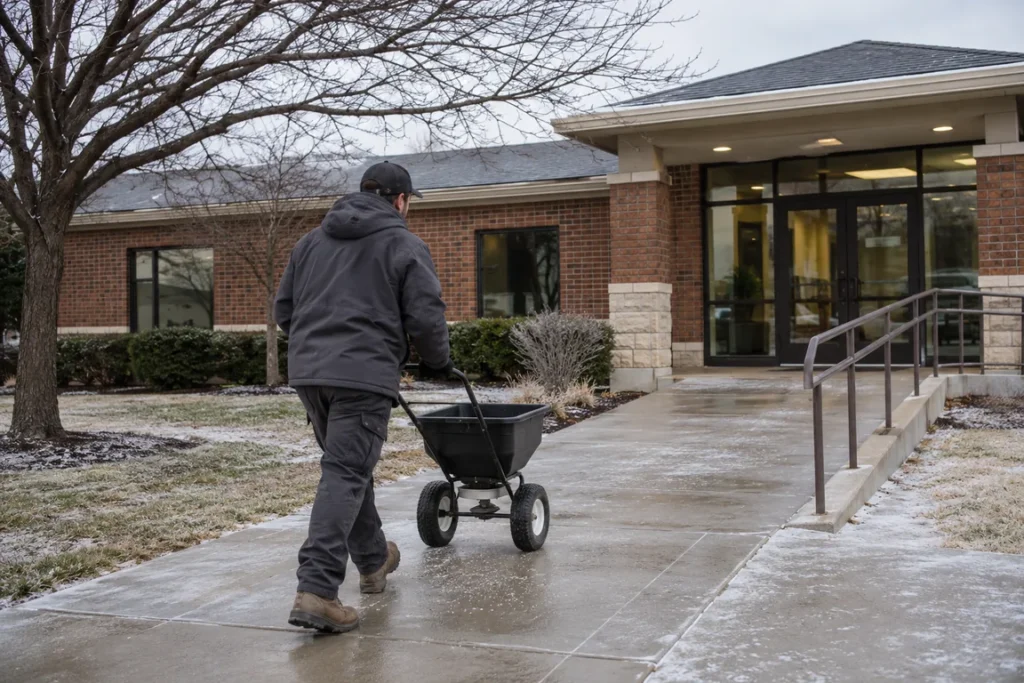
During service Pedestrian routes
Entries & Walkways First
Entries, sidewalks, stairs, ramps, and accessible routes receive attention first. Fire lanes and accessible parking remain part of the agreed route.
- Slip-risk surfaces before vehicle lanes
- Fire lanes and accessible parking remain part of the agreed route
- Surfaces documented after treatment when requested
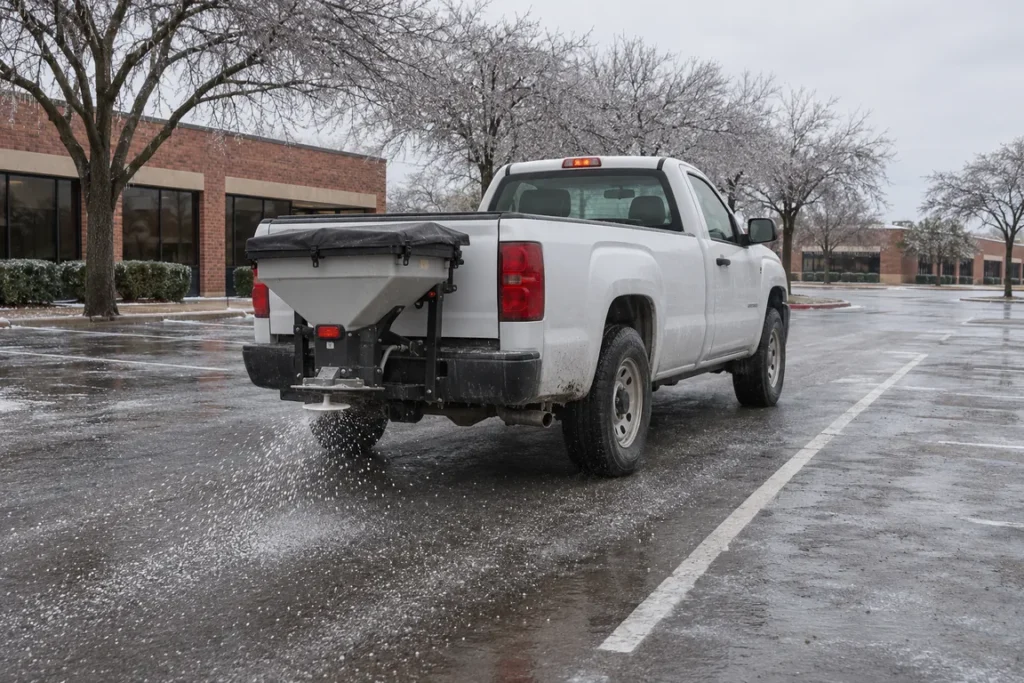
During service Vehicle areas
Drive Lanes & Parking Treated
After pedestrian routes, crews treat drive lanes, parking areas, loading docks, and fire lanes in the order agreed during the site review.
- Vehicle routes treated so tenants and deliveries can move
- Treatment planned with drainage paths in mind
- Parking areas treated as conditions allow
After treatment Follow-up
Overnight Refreeze Check
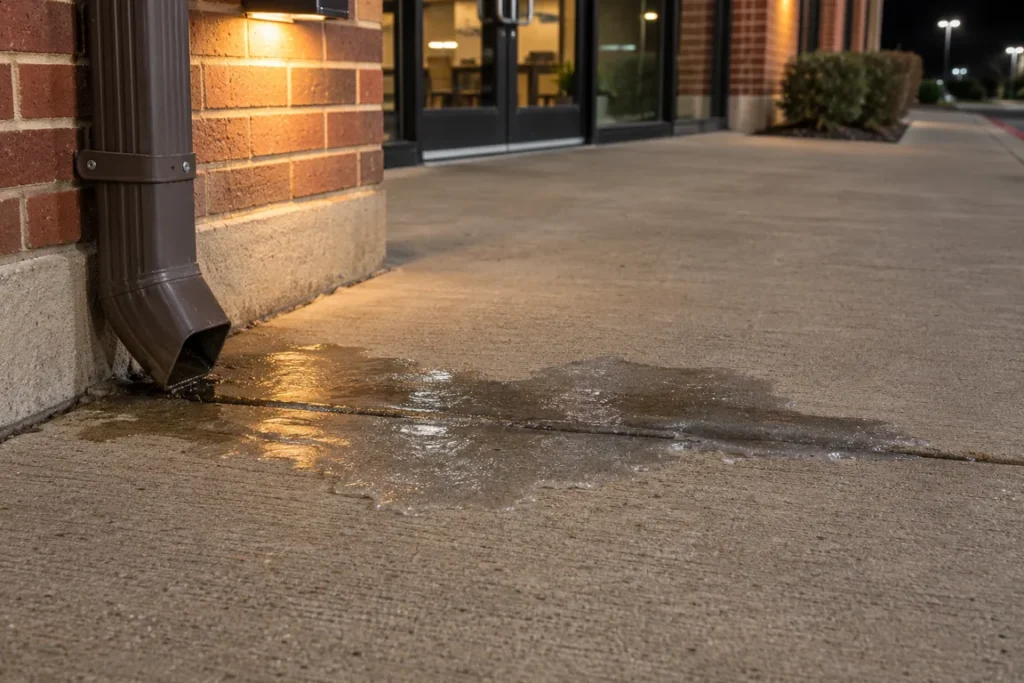
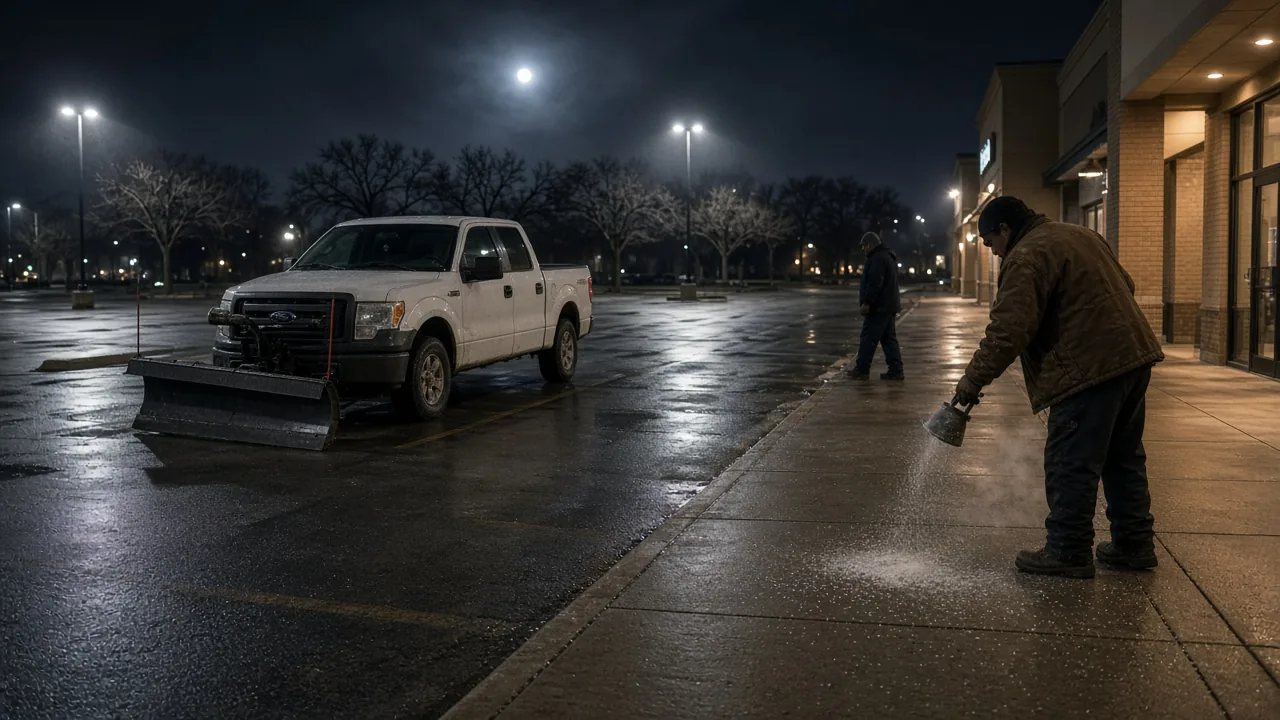
Daytime melt runs across the lot and refreezes after dark into a thinner, more dangerous sheet. The refreeze check is a planned follow-up, not an extra you must request.
- Scheduled follow-up when conditions warrant
- Entries and walkways re-treated as temperatures drop
- Summary available covering the properties serviced
Reserve Your Spot Before the Freeze
Plan de-icing for the surfaces your property needs to keep accessible during freezing conditions.